

Maintaining research integrity best practices protects the long-term value of your work, strengthens your credibility as a scholar, and enables reproducibility. It reinforces public trust in scientific research and supports the entire ecosystem of scientific progress. When you commit to ethical research practices, you ensure your work stands the test of time.
Start with Ethical Research Practices
At its core, research integrity encompasses honesty, rigor, transparency, accountability, and respect. It means conducting research responsibly, reporting it accurately, and following ethical guidelines throughout the research lifecycle. Research integrity is essential to advancing credible, reproducible science.
Publishing in a reputable, peer-reviewed journal signals to peers, funders, and institutions your work meets the highest standards of scientific excellence. These principles are more than formal requirements. Research integrity protects your reputation, strengthens trust in your findings, and ensures your work contributes meaningfully to the scientific community.
To build a strong reputation in your field, your work must be:
- Accurate and unbiased
- Supported by honest data collection and analysis
- Transparent in methods, results, and limitations
- Properly attributed with citations and acknowledgments
- Conducted in alignment with professional codes and ethics
A reputation for rigorous, trustworthy research enhances your influence and ensures your contributions are taken seriously by your community.
Choosing Journals That Uphold Research Integrity
“Publishing in a reputable journal helps establish trust in your research. It’s important to consider the long-term reputation of the journal and its publisher.” —Melissa Patterson, Ph.D., Head of Journal Development
Your choice of journal reflects your values as a researcher. Publishing in journals that prioritize ethical peer review, transparent policies, and scientific rigor, guarantees your work will be evaluated fairly and will contribute responsibly to your field. It confirms your research enters the scholarly record in a way that supports long-term impact.
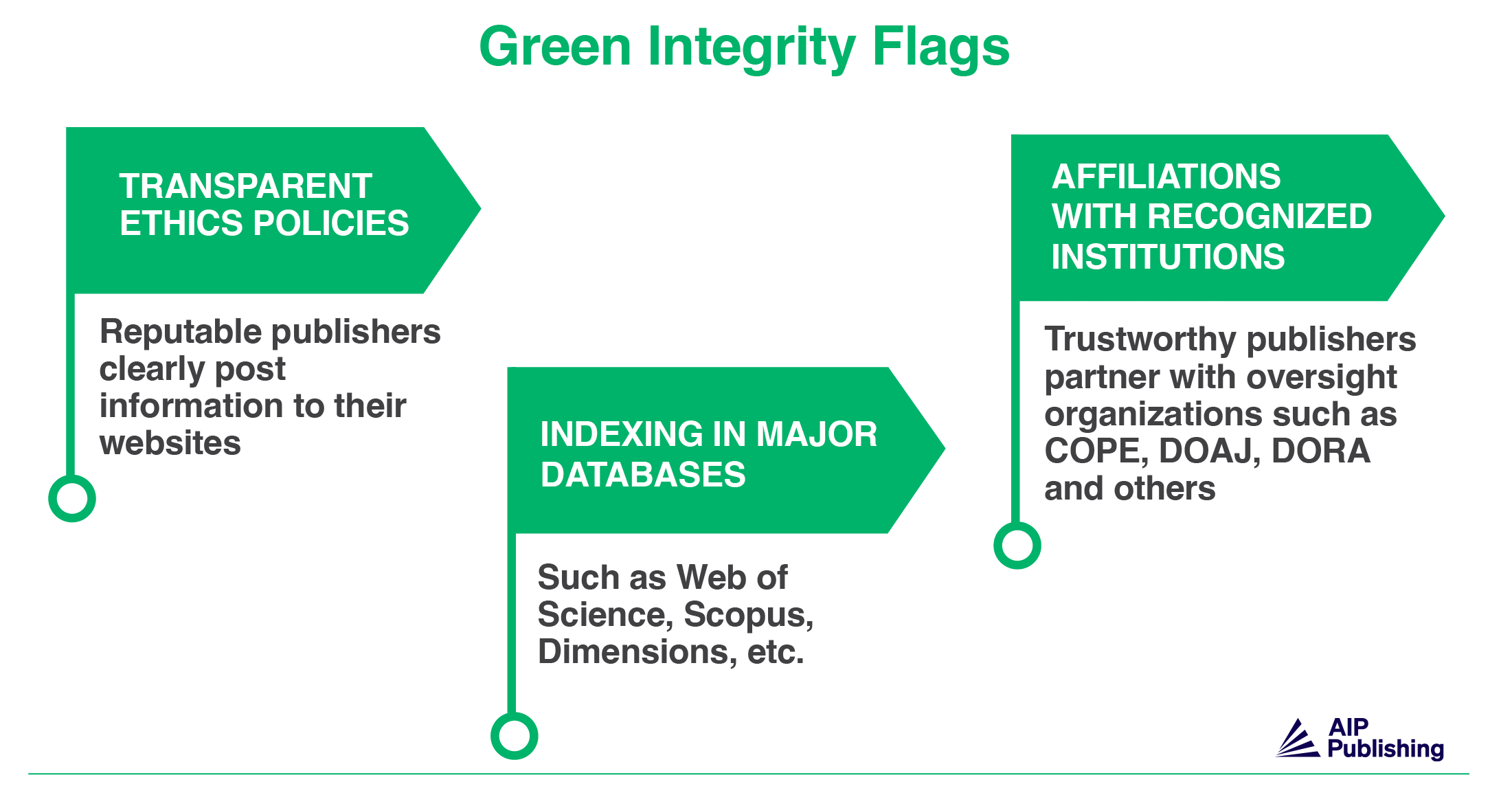
Additional green flags of trustworthy journals and publishers:
- Clear, transparent peer-review processes
- Recognized, verifiable editorial board members
- Transparent article processing fees
- Reputable publisher with history of ethical decision-making and correcting the scientific record
Avoiding Predatory Publishing
With the pressure of “publish or perish”, it can be tempting to choose a journal with fast acceptance decisions, less rigorous peer review standards, or other potential shortcuts as a quick path to publication. Predatory journals undermine the credibility of your research and can harm your career.
Now more than ever it’s important to distinguish between trustworthy publishers and predatory journals. And while speed can be critical to achieving short-term goals, it’s often more important to consider the journal’s reputation for your long-term success.
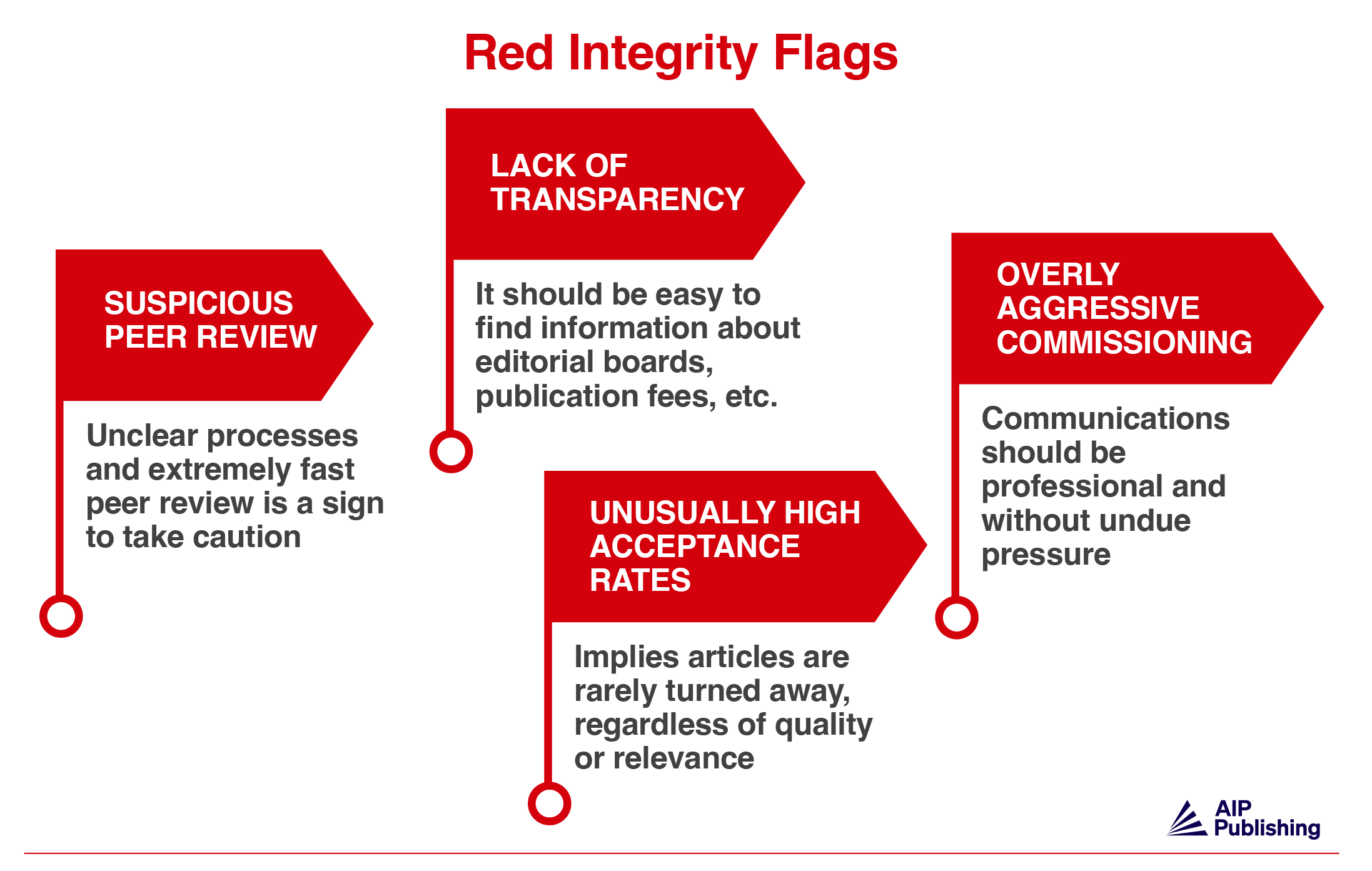
More red flags to avoid:
- Fake or unverifiable impact metrics
- Quality issues on the website such as improper grammar, broken links, etc.
- Journal ‘aims and scope’ are overly broad or nonsensical
- Publisher’s reputation has issues across multiple journals or special issues journals
If a journal’s process is unclear or its metrics are too good to be true, it’s usually a sign to take caution.
Be on the Right Side of Science
Publishing in reputable, peer-reviewed journals demonstrates your commitment to scientific rigor, ethical research, and responsible scholarship. It supports a trustworthy scientific record and strengthens your own academic credibility. Before submitting, always verify a journal’s indexing status or publisher reputation. There are instances where formerly reputable journals may be hijacked and it could take time for the indexing to reflect any suspicious activity. Always conduct through due diligence before deciding if a journal is still worth your time. Also review the editorial board’s legitimacy, peer review transparency, and reputation. Your choices help uphold the standards that allow science to move forward with confidence.
How To Pass Research Integrity Checks
Transparency is the clearest sign of responsible, credible research. The best way to protect your reputation and that of your work is to follow ethical standards throughout the research and publication process.
Research Integrity Checklist
Be sure to check your journal and publisher’s policies and guidelines and also follow these best practices:
Verify Author Statements and Contributions
- Ensure your collaborator list is complete and accurate
- Follow ICMJE authorship criteria
- Provide a clear CRediT author contributions statement
Prioritize transparency and reproducibility
- Share data, software, and code when possible
- Provide complete supplementary files
- Ensure figures and datasets are accurate and unaltered
- Use Industry-accepted data repositories
Maintain ethical practices
- Include required conflict-of-interest and funding statements
- Provide ethics approval documentation for human or animal research
- Follow appropriate practices for paraphrasing and summarizing existing work
- Ensure images meet figure standards for objectively and accurately representing the data, and that any modifications are transparently disclosed
Review AIP Publishing’s ethics policies
The Role of AIP Publishing in Safeguarding Research Integrity
We take our role of providing ethical oversight and promoting trust in the review process seriously. We created the “Research Integrity and Publication Ethics” team to provide expert supervision over resources and functions, in-depth integrity investigations, and to continuously work toward improving our processes. They implement structured workflows for early detection of potential issues by adhering to COPE-aligned ethics policies, require conflicts-of-interest disclosures, and ensure rigorous editorial oversight and reviewer selection; all indicators to our community that we are a reputable and safe place to submit research for publication.
Once you submit your manuscript to us, we’ll partner with you to make certain your work is evaluated fairly, ethically, and with the highest standards of integrity. We work hard to earn your trust by collaborating with editorial teams to prevent bias, upholding ethical publishing practices, and cultivating a qualified, engaged pool of peer reviewers.
Read more from our Research Integrity and Publication Ethics team
Research integrity is essential to credible science.
By committing to ethical research practices, transparent methods, rigorous data handling, and responsible publication choices, you strengthen trust in your work and ensure it contributes meaningfully to the scientific community. Partnering with publishers like AIP Publishing, who prioritize integrity at every stage of the editorial and review process and helps guarantee your research is evaluated fairly and enters the scholarly record responsibly and stands the test of time.
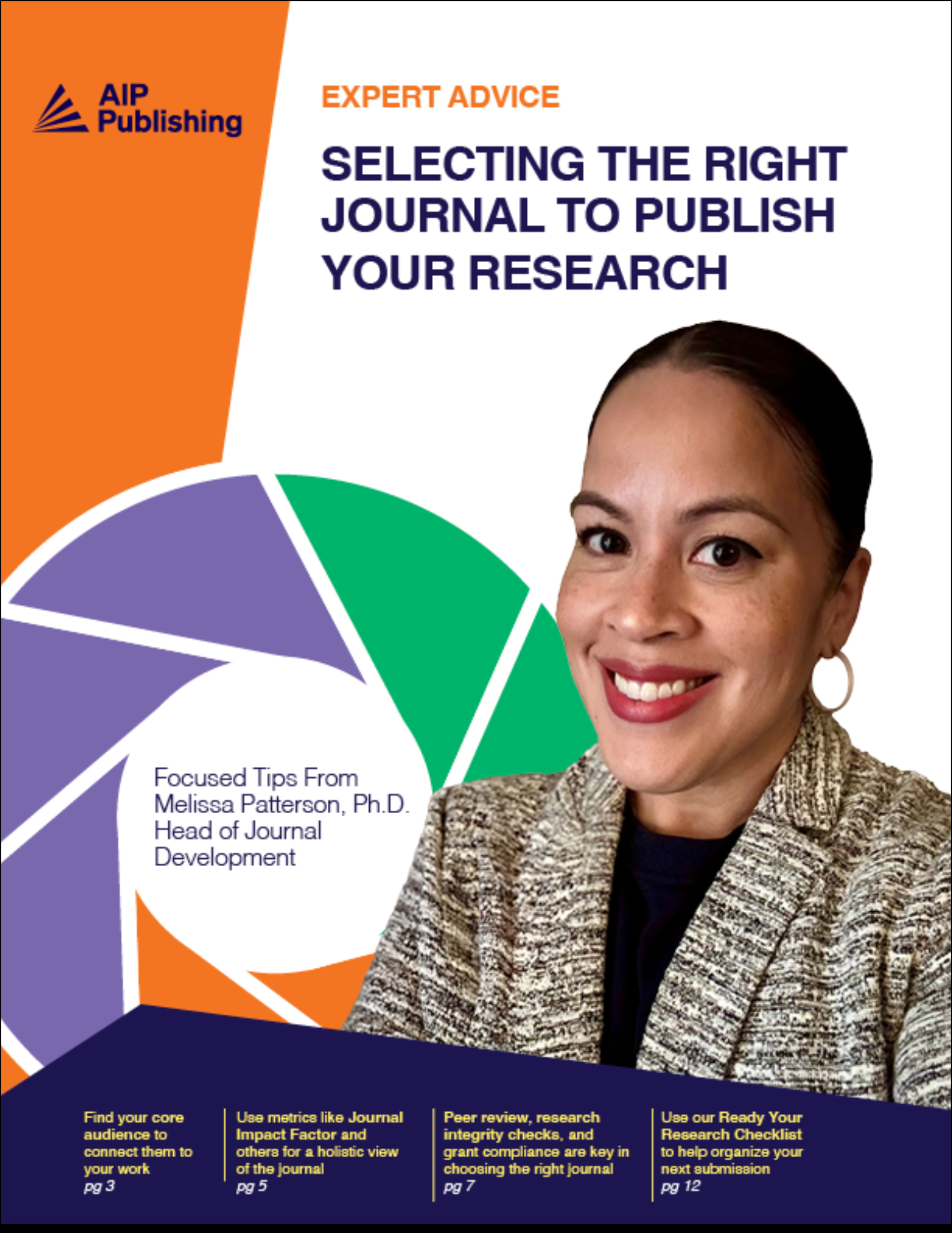 Want to learn more? Download the complete publishing guide, “Expert Advice: Selecting the Right Journal to Publish Your Research” featuring Melissa Patterson, Ph.D., Head of Journal Development