
Our Nobel Legacy
Where big ideas take shape
For over a century, Nobel laureates have published with AIP Publishing (AIPP), sharing discoveries that have transformed how we understand—and shape—the world.
Our Nobel story begins with Manne Siegbahn, awarded the 1924 Nobel Prize in Physics for his discoveries and research in X-ray spectroscopy. Since then, authors who have published with AIPP have been recognized by the Nobel Committee in 75 Nobel Prize years—an enduring legacy of scientific ideas, discoveries, and innovations.

Publishing the work that moves science forward
Highlights from our Nobel laureate authors
From attosecond pulses and quantum dots to blue LEDs and rechargeable batteries, Nobel-recognized breakthroughs demonstrate how physics and chemistry can transform daily life while revealing the fundamental workings of the natural world.
Across generations, disciplines, and national borders, AIPP has published work by scientists whose discoveries have reshaped our understanding of matter, energy, and chemical processes.
Get to know twelve remarkable Nobel laureates and explore selected papers from their enduring scientific records.
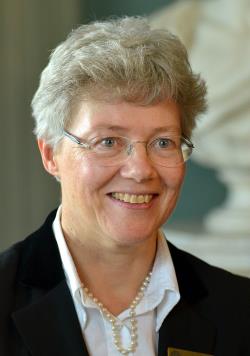
Anne L’Huillier1 — Capturing electron dynamics with attosecond light
Awarded the Nobel Prize in Physics 2023 with Pierre Agostini and Ferenc Krausz
Prize motivation: “recognized for experimental methods that generate attosecond pulses of light for the study of electron dynamics in matter”
Born: 16 August 1958, Paris, France
Affiliation at the time of the award: Lund University, Sweden
L’Huillier helped pioneer methods for producing attosecond pulses of light—flashes so brief that scientists can observe the movement of electrons within atoms and molecules. Her work opened an extraordinary new window into the fundamental behavior of matter.
Top 5 relevant papers:
- Generation of Very High Harmonics of Optical Radiation in Rare Gases
AIP Conference Proceedings (1990) - Harmonic Generation in Rare Gases: Single-Atom Response and Propagation Effects
AIP Conference Proceedings (1990) - Applications of High-Order Harmonic Generation
AIP Conference Proceedings (2000) - Physics of Attosecond Pulses Produced via High Harmonic Generation
American Journal of Physics (2009) - A High-Flux High-Order Harmonic Source
Review of Scientific Instruments (2013)
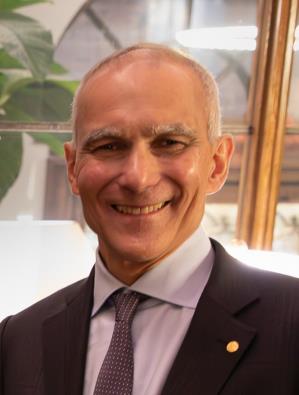
Moungi Bawendi2 — Bringing quantum dots into the modern era
Awarded the Nobel Prize in Chemistry 2023 with Louis Brus and Aleksey Yekimov
Prize motivation: “recognized for the discovery and synthesis of quantum dots”
Born: 15 March 1961, Paris, France
Affiliation at the time of the award: Massachusetts Institute of Technology (MIT), Cambridge, USA
Bawendi developed methods for producing exceptionally high-quality quantum dots—nanometer-scale particles whose properties can be precisely controlled through their size. These advances helped make quantum dots useful in displays, lighting, biological imaging, and emerging technologies.
Top 5 relevant papers:
- X-ray structural characterization of larger CdSe semiconductor clusters
The Journal of Chemical Physics (1989) - Luminescence properties of CdSe quantum crystallites: Resonance between interior and surface localized states
The Journal of Chemical Physics (1992) - Electroluminescence from CdSe quantum-dot/polymer composites
Applied Physics Letters (1995) - The band edge luminescence of surface modified CdSe nanocrystallites: Probing the luminescing state
The Journal of Chemical Physics (1997) - Color-selective semiconductor nanocrystal laser
Applied Physics Letters (2002)
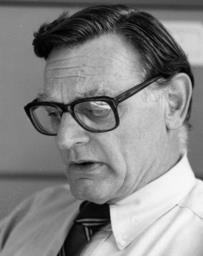
John B. Goodenough3 — Powering the modern world
Awarded the Nobel Prize in Chemistry 2019 with M. Stanley Whittingham and Akira Yoshino
Prize motivation: “recognized for the development of lithium-ion batteries”
Born: 25 July 1922, Jena, Germany
Died: 25 June 2023, Austin, TX, USA
Affiliation at the time of the award: University of Texas, Austin, USA
Goodenough’s discoveries were central to the development of the rechargeable lithium-ion battery. This technology made portable electronics practical and continues to support electric transportation, renewable energy storage, and the transition toward a more connected, lower-carbon world.
Top 5 relevant papers:
- Complex vs Band Formation in Perovskite Oxides
Journal of Applied Physics (1965) - Covalency Criterion for Localized vs Collective Electrons in Oxides with the Perovskite Structure
Journal of Applied Physics (1966) - A Localized-Electron to Collective-Electron Transition in the System (La, Sr)CoO₃
Journal of Applied Physics (1968) - Structural and magnetic characterization of the lithiated iron oxide LiₓFe₃O₄
Journal of Applied Physics (1986) - Quantitative determination of Mn³⁺ content in LiMn₁.₅Ni₀.₅O₄ spinel cathodes by magnetic measurements
Applied Physics Letters (2012)
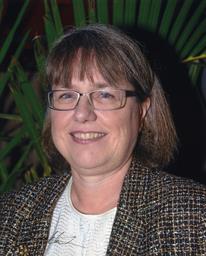
Donna Strickland4 — Transforming high-intensity laser science
Prize motivation: “recognized for their method of generating high-intensity, ultra-short optical pulses”
Born: 27 May 1959, Guelph, Canada
Affiliation at the time of the award: University of Waterloo, Canada
Strickland co-developed chirped pulse amplification, a method for creating exceptionally powerful, ultrashort laser pulses without damaging the equipment that produces them. The technique has enabled advances in scientific research, industrial manufacturing, and laser eye surgery.
Top 4 relevant papers:
- Interaction of a 1 psec Laser Pulse with Solid Matter
Physics of Fluids B: Plasma Physics (1991) - Progress Towards Chirped Pulse Dissociation of Molecules
AIP Conference Proceedings (2000) - The Role of Laser Fluence and Ambient Environments on Femtosecond Laser-Induced Breakdown Spectroscopy and on Surface Morphology of Mg and Zr
Journal of Applied Physics (2019) - Experimental Realization of Near-Critical-Density Laser Wakefield Acceleration: Efficient Pointing 100-keV-Class Electron Beam Generation by Microcapillary Targets
AIP Advances (2024)
Explore more:
Read an interview with Donna Strickland in the AIP Oral History Interviews (OHI) where she describes the challenges of operating an experimental laser lab during the pandemic, and she recounts her childhood in Nova Scotia, her early interests in science, and her decision to pursue an engineering physics degree at McMaster.
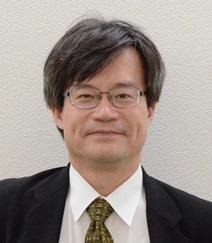
Hiroshi Amano5 — Lighting the world with blue LEDs
Awarded the Nobel Prize in Physics 2014 with Isamu Akasaki and Shuji Nakamura
Prize motivation: “recognized for the invention of efficient blue light-emitting diodes which has enabled bright and energy-saving white light sources”
Born: 11 September 1960, Hamamatsu, Japan
Affiliation at the time of the award: Nagoya University, Japan
Amano shared the 2014 Nobel Prize in Physics for the invention of efficient blue light-emitting diodes, a breakthrough that enabled bright, energy-saving white light. His pioneering research overcame longstanding challenges in growing high-quality gallium nitride and controlling its electrical properties, helping establish the foundations of modern LED and semiconductor technology.
Top 5 relevant papers:
- Metalorganic vapor phase epitaxial growth of a high quality GaN film using an AlN buffer layer
Applied Physics Letters (1986) - p-type conduction in Mg-doped GaN and Al₀.₀₈Ga₀.₉₂N grown by metalorganic vapor phase epitaxy
Applied Physics Letters (1994) - Room-temperature violet stimulated emission from optically pumped AlGaN/GaInN double heterostructure
Applied Physics Letters (1994) - High-quality GaInN/GaN multiple quantum wells
Applied Physics Letters (1996) - Determination of piezoelectric fields in strained GaInN quantum wells using the quantum-confined Stark effect
Applied Physics Letters (1998)
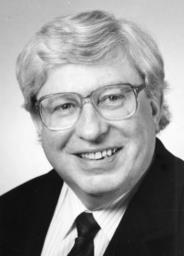
Gerhard Ertl6 — Revealing chemistry at solid surfaces
Awarded the Nobel Prize in Chemistry 2007
Prize motivation: “recognized for his studies of chemical processes on solid surfaces”
Born: 10 October 1936, Bad Cannstatt, Germany
Affiliation at the time of the award: Fritz-Haber-Institut der Max-Planck-Gesellschaft, Berlin, Germany
Ertl received the 2007 Nobel Prize in Chemistry for revealing how chemical reactions occur on solid surfaces. His pioneering studies of adsorption and catalysis transformed our understanding of important processes including ammonia production and carbon-monoxide oxidation.
Top 5 relevant papers:
- Adsorption of hydrogen on nickel single crystal surfaces
The Journal of Chemical Physics (1974) - A molecular beam investigation of the catalytic oxidation of CO on Pd (111)
The Journal of Chemical Physics (1978) - A molecular beam study of the catalytic oxidation of CO on a Pt(111) surface
The Journal of Chemical Physics (1980) - Primary steps in catalytic synthesis of ammonia
Journal of Vacuum Science & Technology A (1983) - Interaction of oxygen with Al(111) studied by scanning tunneling microscopy
The Journal of Chemical Physics (1993)
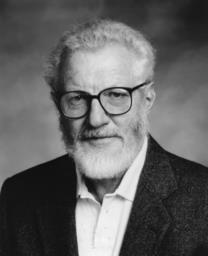
Herbert Kroemer7 — Engineering heterostructures for modern optoelectronics
Awarded the Nobel Prize in Physics 2000 with Zhores Alferov
Prize motivation: “recognized for developing semiconductor heterostructures used in high-speed- and opto-electronics”
Born: 25 August 1928, Weimar, Germany
Died: 8 March 2024, Santa Barbara, CA, USA
Affiliation at the time of the award: University of California, Santa Barbara, USA
Kroemer pioneered semiconductor heterostructures that allow electrons and light to be controlled with exceptional precision. His ideas helped enable high-speed transistors, semiconductor lasers, fibre-optic communications, and many other technologies underpinning modern electronics and photonics.
Top 5 relevant papers:
- Photocollection efficiency and interface charges of MBE‐grown abrupt p (GaAs) ‐N (Al0.33Ga0.67As) heterojunctions
Applied Physics Letters (1978) - Measurement of isotype heterojunction barriers by C‐V profiling
Applied Physics Letters (1980) - Staggered‐lineup heterojunctions as sources of tunable below‐gap radiation: Experimental verification
Applied Physics Letters (1984) - Determination of valence and conduction‐band discontinuities at the (Ga,In) P/GaAs heterojunction by C‐V profiling
Journal of Applied Physics (1987) - Electron concentrations and mobilities in AlSb/InAs/AlSb quantum wells
Journal of Applied Physics (1989)
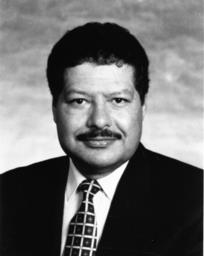
Ahmed H. Zewail8 — Capturing chemistry in motion
Awarded the Nobel Prize in Chemistry 1999
Prize motivation: “recognized for his studies of the transition states of chemical reactions using femtosecond spectroscopy”
Born: 26 February 1946, Damanhur, Egypt
Died: 2 August 2016, Pasadena, CA, USA
Affiliation at the time of the award: California Institute of Technology (Caltech), Pasadena, USA
Zewail founded the field of femtochemistry by using ultrafast laser pulses to observe the fleeting moments in which chemical bonds break and form. His work allowed scientists to study chemical reactions as they happen, rather than only examining their starting materials and results.
Top 5 relevant papers:
- Real-time femtosecond probing of “transition states” in chemical reactions
The Journal of Chemical Physics (1987) - Femtosecond real-time probing of reactions. I. The technique
The Journal of Chemical Physics (1988) - Femtosecond real-time probing of reactions. II. The dissociation reaction of ICN
The Journal of Chemical Physics (1988) - Femtosecond real-time observation of wave packet oscillations (resonance) in dissociation reactions
The Journal of Chemical Physics (1988) - Real-time clocking of bimolecular reactions: Application to H + CO₂
The Journal of Chemical Physics (1990)
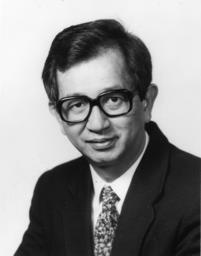
Yuan T. Lee9 — Illuminating the dynamics of chemical reactions
Awarded the Nobel Prize in Chemistry 1986 with Dudley R. Herschbach and John C. Polanyi
Prize motivation: “recognized for their contributions concerning the dynamics of chemical elementary processes”
Born: 19 November 1936, Hsinchu, Taiwan
Affiliation at the time of the award: University of California, Berkeley, USA
Lee developed sophisticated molecular-beam experiments that revealed how individual atoms and molecules behave during chemical reactions. His work helped turn reaction dynamics into a precise experimental science and transformed our understanding of chemistry at the molecular level.
Top 5 relevant papers:
- A crossed molecular beam study of the translational energy dependence of Cl + Br₂ → BrCl + Br reaction
The Journal of Chemical Physics (1977) - Study of the reaction dynamics of Li + HF, HCl by the crossed molecular beams method
The Journal of Chemical Physics (1980) - A crossed molecular beams investigation of the reactions O(³P) + C₆H₆, C₆D₆
The Journal of Chemical Physics (1980) - The effects of collision energy and vibrational excitation on H⁺₂, HD⁺ + He reactions
The Journal of Chemical Physics (1984) - Universal crossed molecular beams apparatus with synchrotron photoionization mass spectrometric product detection
Review of Scientific Instruments (1997)
Explore more:
View photos and images of Yuan T. Lee in the AIP Physics Today Collection, including Lee receiving the 1981 E. O. Lawrence award at a ceremony in 1982, Lee alongside fellow chemistry laureates after the Nobel lectures in 1991, and a drawing of Lee by Zdenek Herman from 1998.
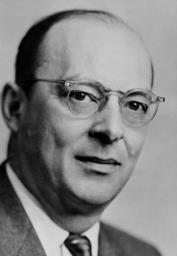
John Bardeen10, 11 — Transforming electronics and explaining superconductivity
Awarded the Nobel Prize in Physics 1972 with Leon N. Cooper and Robert Schrieffer
Prize motivation: “recognized for their jointly developed theory of superconductivity, usually called the BCS-theory”
Awarded the Nobel Prize in Physics 1956 with William B. Shockley and Walter H. Brattain
Prize motivation: “recognized for their research on semiconductors and their discovery of the transistor effect”
Born: 23 May 1908, Madison, WI, USA
Died: 30 January 1991, Boston, MA, USA
Affiliation at the time of the award (1956 and 1972): University of Illinois, Urbana, USA
Bardeen helped create two pillars of modern physics: the transistor, which revolutionized electronics, and the Bardeen–Cooper–Schrieffer theory of superconductivity. These achievements made him the first—and so far, the only—person to receive the Nobel Prize in Physics twice.
Top 5 relevant papers:
- Electrical Conductivity of Metals
Journal of Applied Physics (1940) - Electrolytic Analog Transistor
Journal of Applied Physics (1954) - Developments of concepts in superconductivity
Physics Today (1963) - Advances in superconductivity
Physics Today (1969) - Electron‐phonon interactions and superconductivity
Physics Today (1973)
Explore more:
View photos of John Bardeen in the AIP Physics Today Collection, including the Nobel Prize certificate awarded to Bardeen, Cooper and Schrieffer in December 1972, a portrait drawing of William Shockley, Walter Brattain and John Bardeen from 1956, and Bardeen waiting in line at the Nobel Prize ceremony in Stockholm, Sweden in 1956.
Read a series of interviews with John Bardeen from the AIP Oral History Interviews (OHI). The first interview session from May 12, 1977, the second interview session from May 16, 1977, and the third interview session from December1, 1977, explores highlights from his childhood through research at Bell Laboratories in 1947-1948 leading to the discovery of the transistor. Then the fourth interview session from December 22, 1977, and the fifth interview session from April 4, 1978, discuss the discovery of the transistor in more detail. A sixth interview from February 13, 1980, explores the collective history of the discovery and development of the transistor.
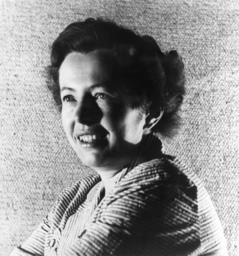
Maria Goeppert Mayer12 — Unlocking the structure of the atomic nucleus
Awarded the Nobel Prize in Physics 1963 with J. Hans D. Jensen
Prize motivation: “recognized for their discoveries concerning nuclear shell structure”
Born: 28 June 1906, Kattowitz, Germany (now Katowice, Poland)
Died: 20 February 1972, San Diego, CA, USA
Affiliation at the time of the award: University of California, San Diego, USA
Goeppert Mayer developed the nuclear shell model, explaining why certain arrangements of protons and neutrons create especially stable atomic nuclei. Her discovery reshaped nuclear physics and made her only the second woman to receive the Nobel Prize in Physics.
Top 5 relevant papers:
- Calculation of Equilibrium Constants for Isotopic Exchange Reactions
The Journal of Chemical Physics (1947) - Calculations of the Lower Excited Levels of Benzene
The Journal of Chemical Physics (1938) - On the States of Aggregation
The Journal of Chemical Physics (1934) - Vibrational Spectrum and Thermodynamic Properties of Uranium Hexafluoride Gas
The Journal of Chemical Physics (1948) - Lattice Summations for Hexagonal Close-Packed Crystals
The Journal of Chemical Physics (1940)
Explore more:
View photos of Maria Goeppert Mayer in the AIP Physics Today Collection, including Goeppert Mayer with King Gustav of Sweden at Nobel Prize ceremony in December 1963, a photo of husband-and-wife physicists, Joseph Mayer and Maria Goeppert-Mayer, and a group photo of Joseph Mayer, Maria Goeppert-Mayer, and Karl Herzfeld in Washington, D.C. for the American Physical Society (APS) meeting.
Plus, read an interview with Maria Goeppert Mayer from February 20, 1962, which explores her family background, how she became interested in physics, and her career in scientific research.
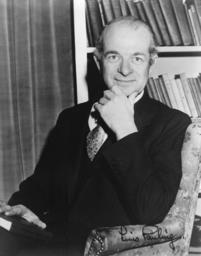
Linus Pauling13, 14 — Redefining chemistry—and the scientist’s public role
Awarded the Nobel Peace Prize 1962
Prize motivation: “recognized for his fight against the nuclear arms race between East and West”
Awarded the Nobel Prize in Chemistry 1954
Prize motivation: “recognized for his research into the nature of the chemical bond and its application to the elucidation of the structure of complex substances”
Born: 28 February 1901, Portland, OR, USA
Died: 19 August 1994, Big Sur, CA, USA
Affiliation at the time of the award: California Institute of Technology (Caltech), Pasadena, USA
Pauling transformed modern chemistry by explaining the nature of the chemical bond and connecting molecular structure to the properties of complex substances. He later became a leading campaigner against nuclear weapons and remains the only person awarded two unshared Nobel Prizes.
Top 5 relevant papers:
- The Calculation of Matrix Elements for Lewis Electronic Structures of Molecules
The Journal of Chemical Physics (1933) - The Nature of the Chemical Bond. V. The Quantum-Mechanical Calculation of the Resonance Energy of Benzene and Naphthalene and the Hydrocarbon Free Radicals
The Journal of Chemical Physics (1933) - The Nature of the Chemical Bond. VI. The Calculation from Thermochemical Data of the Energy of Resonance of Molecules Among Several Electronic Structures
The Journal of Chemical Physics (1933) - A Study of the Methods of Interpretation of Electron-Diffraction Photographs of Gas Molecules, with Results for Benzene and Carbon Tetrachloride
The Journal of Chemical Physics (1934) - Molecular Models of Amino Acids, Peptides, and Proteins
Review of Scientific Instruments (1953)
Explore more:
View photos of Linus Pauling in the AIP Physics Today Collection, including Pauling picketing the White House as part of a mass demonstration protesting the resumption of U.S. atmospheric nuclear tests in April 1962, Pauling at a press conference about quasicrystals at the American Physical Society (APS) March Meeting in 1987, and a group photo featuring Pauling at the Rancho Santa Fe Conference in 1950, which was an interdisciplinary gathering devoted to the origin and early history of the earth.
Read an interview with Linus Pauling from March 27, 1964, which explores his family background, education, the people who influenced him, and his career.
Shaping the discoveries still to come
The achievements of these Nobel laureates form part of a scientific story that continues to unfold. Across our journals, AIPP connects researchers with the communities that can test, develop, and build upon their innovations—advancing the physical sciences and opening new directions for discovery.
Explore more Nobel Prize content from AIP
Back to Nobel laureate navigation
Sources
- Anne L’Huillier – Facts 2023 – NobelPrize.org. Accessed August 2026.
https://www.nobelprize.org/prizes/physics/2023/lhuillier/facts/ - Moungi Bawendi – Facts 2023 – NobelPrize.org. August 2026.
https://www.nobelprize.org/prizes/chemistry/2023/bawendi/facts/ - John B. Goodenough – Facts 2019 – NobelPrize.org. August 2026.
https://www.nobelprize.org/prizes/chemistry/2019/goodenough/facts/ - Donna Strickland – Facts 2018 – NobelPrize.org. August 2026.
https://www.nobelprize.org/prizes/physics/2018/strickland/facts/ - Hiroshi Amano – Facts 2014 – NobelPrize.org. August 2026.
https://www.nobelprize.org/prizes/physics/2014/amano/facts/ - Gerhard Ertl – Facts 2007 – NobelPrize.org. August 2026.
https://www.nobelprize.org/prizes/chemistry/2007/ertl/facts/ - Herbert Kroemer – Facts 2000– NobelPrize.org. August 2026.
https://www.nobelprize.org/prizes/physics/2000/kroemer/facts/ - Ahmed Zewail – Facts 1999 – NobelPrize.org. August 2026.
https://www.nobelprize.org/prizes/chemistry/1999/zewail/facts/ - Yuan T. Lee – Facts 1986 – NobelPrize.org. August 2026.
https://www.nobelprize.org/prizes/chemistry/1986/lee/facts/ - John Bardeen – Facts 1972 – NobelPrize.org. August 2026.
https://www.nobelprize.org/prizes/physics/1972/bardeen/facts/ - John Bardeen – Facts 1956 – NobelPrize.org. August 2026.
https://www.nobelprize.org/prizes/physics/1956/bardeen/facts/ - Maria Goeppert Mayer – Facts 1963 – NobelPrize.org. August 2026.
https://www.nobelprize.org/prizes/physics/1963/mayer/facts/ - Linus Pauling – Facts 1962 – NobelPrize.org. August 2026.
https://www.nobelprize.org/prizes/peace/1962/pauling/facts/ - Linus Pauling – Facts 1954 – NobelPrize.org. August 2026.
https://www.nobelprize.org/prizes/chemistry/1954/pauling/facts/