

If collaborative working is the bedrock of science; networking is the soil. Growing professional relationships to nourish your research collaborations should be more than something that happens once at a conference or an item to check off a list. Like a healthy root system, research collaboration should be grown over time through planning, nurturing, and care.
Why Collaboration Benefits Researchers
In the research ecosystem, today’s biggest challenges rarely fit inside one discipline. Whether you’re looking for research partnerships, preparing grant proposals, collecting data, or expanding the impact of your research, collaboration leads to better methodology, broader expertise, bigger datasets, more visibility.
The case for working together keeps growing:
- Collaborative work tends to lead to better quality research1, and often collects more citations than solo work, with the citation advantage growing with each additional author2.
- Interdisciplinary collaboration can take longer to develop but it’s worth the effort. Researchers who collaborate across disciplines eventually out-fund their more specialized peers in both the number of grants awarded and what those grants are worth3.
The Research Collaboration Lifecycle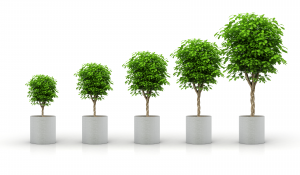
Networking operates like a root system. It keeps branching, reaching, and connecting, one small, manageable step at a time. Each stage creates the conditions for the next, and the cycle starts again, usually growing larger with deepening connections over time. Let’s explore ways for you to expand your network and help feed your next collaboration.
Stage 1: Build Your Professional Network Before You Need It
Think about the last time you needed a collaborator. Chances are that you reached out to someone you already knew. So, how do you build that kind of familiarity before you need it? None of this has to happen all at once but the strongest networks are built one conversation at a time.
We know networking can feel like one more thing on an already full plate, so here are a few ways to help make it a habit:
- Do conferences differently: Your time is precious, so instead of collecting business cards, attend strategically.
- Sit in on sessions outside your subfield
- Ask a thoughtful question after a talk. Follow up with the speaker afterward
- Attend poster sessions and workshops. They are great places to spark conversations in a supportive environment
- Show up online consistently: LinkedIn, ResearchGate, and Reddit are the modern equivalent of conference hallways.
- Comment on others’ work, join discussions, and offer your expertise rather than just posting insights to your own work
- Be visible at institutional seminars and webinars. They’re sometimes overlooked but are some of the easiest places to ask questions and meet your peers
- Join a professional society: Professional societies for researchers can give you access to member directories, events, and a built-in community of people working on adjacent problems. That familiarity pays off when you need it most.
- Our parent organization, AIP, is a federation professional societies. Are you a member?
★ Best Practice: Keep your ORCID ID up to date. It’s not a networking tool in the same way, but it’s how your work stays correctly identified and connected to you across journals, grants, and institutions.
Stage 2: Turn Connections into Collaborations
You’ve laid the groundwork with your conference, social media, and online presence. The next step is turning that familiarity into a real collaboration. Treat a collaborator like you’d treat a friend. Small, regular interactions are the building blocks of sustained trust rather than occasional grand gestures. In practice, that means partnering on things such as:
- Data sharing
- Co-supervising students
- Small pilot studies
- Conference workshops
- Reviewing manuscripts together
- Co-authoring review articles
Before anything formally begins, talk through the basics, such as shared goals, communication style, publication expectations, availability, and authorship. Fresh perspectives push research further so look for complementary expertise rather than a researcher who mirrors your own. A familiar face isn’t automatically a good collaborator.
Stage 3: Build Effective Research Partnerships
Once you’ve started making outreach part of your process, put in place some structure. Before a project gets underway, work through these topics with your potential co-authors:
- Funding: who’s covering what and from where?
- Responsibilities: who owns which part of the work?
- Data ownership: who holds the data, and who can use it after?
- Authorship: decide together the order, criteria, and who’s included
- Timelines: set realistic deadlines agreed to by everyone
- Communication schedule: how often and through what channel?
It won’t always go smoothly but most friction is avoidable.
Interdisciplinary collaboration tends to uncover questions individual researchers miss on their own. Here’s a quick list of common collaboration challenges, and how to avoid them:
Challenge vs. Best Practice
- Miscommunication: Set up regular check-ins from the start
- Unclear authorship: Agree on and document authorship expectations and criteria early, and revisit as contributions become clear
- Mismatched expectations: Put shared, transparent expectations in writing early
- Uneven workload: Assign responsibilities up front, using a shared project management tool
- Data management issues: Keep documentation and repositories shared, with version control in place
- Geographic distance: Build in consistent virtual check-ins at times that work for most. Document notes/actions for those who are absent
Stage 4: Publish Together Successfully
The goal of all your teamwork and collaboration is to submit your research to a journal for review. It takes effort, but collaborative working consistently produces stronger manuscripts, from increased visibility across disciplines to more rigorous validation. The evidence backs this up: The team approach to science tends to produce results with greater impact and innovation than solo work, especially when the team spans disciplines, institutions, or geographies4.
It’s worth revisiting author assignments because getting it right matters. This is your contribution to the scientific record, and it should be recognized accurately. Particularly key to get right is the distinction between corresponding and contributing authors, especially when publishing under a transformative agreement like read and publish or AIP Fusion. The corresponding author’s institution uses their transformative agreement to fund any Article Procession Charges (APCs) for open access publishing. The corresponding author also takes primary responsibility for communication with the journal during the manuscript submission, peer-review, and publication process. Always be sure you’re meeting your journal’s specific authorship guidelines.
AIPP’s author guidelines will help you get started.
Stage 5: Grow Your Network After Publication
Publication is a huge achievement, congratulations! However, it’s not time to rest. Make sure you and your partners are doing everything possible to promote your paper. You can use the same process you used to build for this paper to promote your work and maximize its impact. It can help to build new connections that may help launch your next collaboration. The Research Collaboration Cycle is a continuous loop that grows and deepens your network.
Keeping that momentum going after publishing can look like:
- Sharing findings at conferences
- Being a featured speaker for webinars
- Giving institutional talks
- Posting on social media
- Writing blog articles
- Contributing to society newsletters
- Doing podcast interviews
When someone reaches out about your poster or presentation, respond. A published paper is often the proof-of-concept that makes the next collaboration possible so keep developing your professional relationships. Many long-term collaborations begin exactly this way. That circle keeps widening as your career does. Early on, it might mean finding mentors and co-authors. Later, it’s leading your own teams and sponsoring the next generation of researchers. The network that helped you get published once is the same one that carries you through every stage that follows.
Collaboration Creates Momentum
 Meaningful networking is less about filling an address book and more about championing the principles of community and discovery. Every conversation, conference, co-authored paper, and peer review contributes to a professional network that advances scientific knowledge, as well as careers.
Researchers who consistently invest in authentic collaboration often build stronger research programs, produce more impactful publications, and become valued contributors to the broader scientific community. You don’t need to do this perfectly; you just need to start. Our mission is to ignite curiosity, paving the way toward new horizons in the physical sciences. We’ve built AIP Publishing to be part of your community too. Whether you’re just starting to build your network or looking to deepen the ones you already have, AIPP’s resources for researchers is here to help.
 Get Your Free Guide! Download “Expert Advice: Selecting the Right Journal to Publish Your Research” featuring Melissa Patterson, Ph.D., Head of Journal Development, for insider tips to help you with your next submission.
1 Massimo Franceschet, Antonio Costantini, The effect of scholar collaboration on impact and quality of academic papers, Journal of Informetrics (2010). https://doi.org/10.1016/j.joi.2010.06.003.
2 Thelwall, M. & Maflahi, N. Academic collaboration rates and citation associations vary substantially between countries and fields. J Assoc Inf Sci Technol 71(8), 968–978 (2020). https://doi.org/10.1002/asi.24315
3 Thelwall, M., Kousha, K., Abdoli, M., Stuart, E., Makita, M., Wilson, P. & Levitt, J. Which international co-authorships produce higher quality journal articles? J Assoc Inf Sci Technol 75(7), 769–788 (2024). https://doi.org/10.1002/asi.24881
4 National Research Council. Enhancing the Effectiveness of Team Science. National Academies Press, Washington, DC (2015). https://www.ncbi.nlm.nih.gov/books/NBK310391/