
Competition for scientific research grants is intense. Writing a strong grant proposal is a critical first step in your research journey. While not directly involved in the proposal or grant review processes, AIP Publishing reviews thousands of funded project outcomes each year, and we see how the most successful research journeys unfold. In this blog, we provide actionable tips on how to write effective grant proposals and position your application for a smoother journey from research funding to publication.
One: Strategize before you write
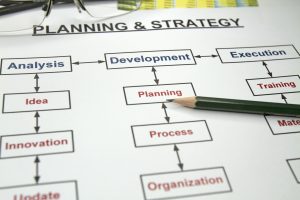
- Identify the funders and programs that best align with your project’s goals. Sign up for funding alerts and maintain a calendar of opportunities before drafting your research grant proposal to help you stay ahead of application deadlines and cycles.
- Understand how your work aligns with each research funder’s mission. It’s one of the most important early steps. Each organization emphasizes different priorities, eligibility criteria, and expectations.
- Check criteria, deadlines, and expectations thoroughly before you begin the grant writing process. Once you’ve identified the right opportunity, tailor your proposal accordingly. It’s worth seeking advice from a range of sources at this stage – previous grant awardees, your institution’s grant office, mentors, and colleagues – to find out how these individuals and teams crafted a competitive scientific grant proposal and what made it successful.
- Consider becoming a grant reviewer: Early career researchers or first-time grant writers could benefit from volunteering to participate in the grant review process. Seeing real grant proposals and understanding the evaluation criteria can help improve your own grant writing.
- Plan how you will meet the funder’s guidelines and mandates.: Thinking ahead to publishing your research results, does the funder have any requirements for open access (OA) publishing, data sharing, or specific licensing requirements for research publications? AIP Publishing offers multiple paths to open access publishing including:
-
- A robust portfolio of gold and diamond OA journals: Gold OA journals provide immediate access to all published content to all without the need for a subscription, while diamond OA journals offer the same access for readers with no publication costs for authors.
- Author Select®: A flexible OA option within subscription journals that helps authors meet funder mandates while publishing in the journal best suited to their audience.
- Public access compliance support: Helping authors meet funder and institutional requirements for open and long-term access to research.
- CC BY 4.0 licensing by default: enabling authors to seamlessly meet common funder mandates.
- Institutional agreements with pre-paid Article Processing Charges (APCs):AIPP have agreements with institutions that cover the costs of open access publishing for their researchers. Check to see if your organization participates in Read and Publish or AIP Fusion.
Two: Craft a clear and compelling narrative for your grant proposal
A strong grant proposal tells the story about the work you plan to do. Your grant application reviewers may not be subject matter experts in your field, so focus on clarity over technical jargon. Emphasize feasibility and highlight the potential impact of your research. This is especially important in the executive summary, where a concise and gripping overview can set a positive tone for the entire grant application.

You’ll need to check the proposal follows the specific structure and formatting rules for your funder, but a typical narrative flow might include:
- Problem: Why does this topic matter? Frame your proposal within the broader context that highlights its relevance.
- Gap: How will my work differ? Describe what the field already knows, what remains unknown, and why addressing that gap is important. Be factual and balanced: it’s best to avoid overstating limitations in prior work.
- Hypothesis: What will the work look to prove? What are the testable statements or aims that articulate what your project will uncover or demonstrate?
- Methodology: How will the work be conducted? Ensure this is a realistic and feasible design, including a sound statistical plan. Reviewers will want to know that your research design will be able to answer the question you are posing. It’s also helpful to identify potential pitfalls and offer alternative approaches to show you’ve carefully considered your method. If there is preliminary data, include it as supporting evidence.
- Costs: What resources are required to do the work? Request research costs that align with the scope and specifications of the grant, and reflect what is necessary for your project. Remember to include a budget for open access (OA) Article Processing Charges (APCs) if open access is a requirement of the grant.
- Impact: What are the intended consequences of doing this work, and who benefits? Explain how your work contributes to broader research priorities, and how you will engage others. For example, outline how you will progress from results to readers, such as publishing in a reputable journal and presenting at core community conferences. Describing how you’ll align with OA and data-sharing expectations helps to show that your work will be read, reused, and built upon as widely as possible.
As you refine your narrative, think about the full research lifecycle. Focusing on future readers and editors, rather than only the grant panel, can make your narrative sharper. The same qualities that help reviewers understand and trust your work in successful research proposals such as clear questions, realistic methods, and transparent risk management, can help support a smoother publication process later.
TIP: A good method to help refine your narrative is to review successful grant proposals from funders you are targeting to understand their expectations. Also look to university research offices and institutional repositories for samples to help you craft your proposal.
Three: Highlight your team and resources
Make it clear why your team is well positioned to carry out the proposed work. Briefly outline the expertise, experience, and prior achievements that demonstrate your ability to deliver the project. Highlight the relevant skills, successful collaborations, access to specialized equipment or facilities, and institutional support that strengthen your case.
Where appropriate, ensure:
- Contributor information is clearly identifiable: maintain up to date ORCID records, encourage collaborators to use ORCID IDs
- Follow funder mandates: Use Metadata and ROR identifiers to accurately identify institutional affiliations.
These practices improve transparency, make it easier for reviewers and funders to assess contributions, and ensure your work is properly attributed and discoverable over time.
Four: Follow guidelines and review thoroughly
Just as in the publication process, many grant writing challenges stem from avoidable issues: missing materials, incorrect formatting, or failure to follow instructions. Carefully review the funder’s guidelines, verify that all required documents (such as budgets, letters of support, or CVs) are included, and ensure your narrative fits the prescribed structure.
Before submitting, ask a colleague or mentor to check your proposal. Have a fresh pair of eyes review it and ask; does it tell the story in a compelling way? Is it clear, accurate, and complete? Are spelling and grammatical errors fixed? Thorough editing not only strengthens your proposal, it reflects the same attention to detail that will support smoother manuscript preparation and publication planning later in the research lifecycle. Lastly, remember this process can take a lot of time. Keep organized and plan how you will meet the submission deadline.
Five: Persistence is part of the process

Even if you follow all these tips, strong proposals are not always successful. The scientists with the highest rates of grant approvals are also the ones who get rejected the most often. Each application sharpens your ideas, improves your narrative, and strengthens your next submission. Keep going!
Ready to start your grant application? As you prepare for your next grant, remember to start early, stay organized, and think through all the steps from proposal to publication. As a steward of scientific knowledge, AIP Publishing supports public access compliance with multiple pathways for OA publishing, making us a wise choice when you’re ready to publish your findings.
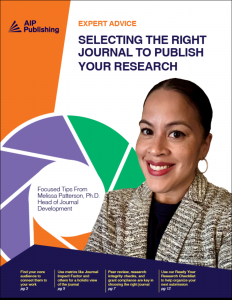 Get Your Free Guide! Download “Expert Advice: Selecting the Right Journal to Publish Your Research” featuring Melissa Patterson, Ph.D., Head of Journal Development, for insider tips to help you with your next submission.