

Study bridges information gap between land- and water-based photovoltaic systems.
From the Journal: Journal of Renewable and Sustainable Energy
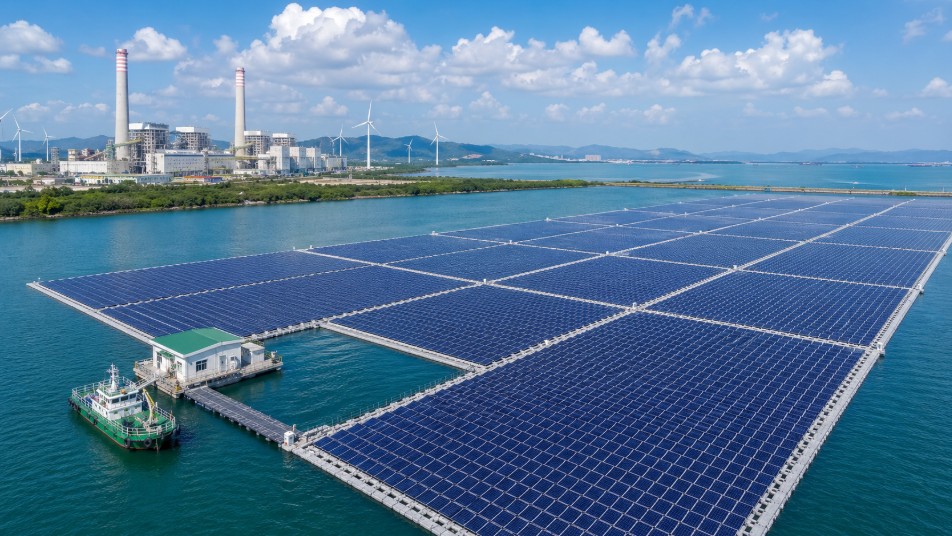
WASHINGTON, May 19, 2026 — The effects of global warming are becoming increasingly evident and catastrophic. To prevent irreversible consequences, international scientific consensus emphasizes the importance of mitigating climate change in ways that limit global temperature rise to within 1.5 degrees Celsius above preindustrial levels. Many nations have committed to net zero carbon emissions targets by 2050, which will require international cooperation, policy implementation, and technological innovation.
Some land-restricted nations have begun deploying photovoltaic (PV) systems on inland water bodies and offshore to harness solar energy. Existing research on floating photovoltaic systems and offshore floating photovoltaic (OFPV) systems has primarily focused on energy management and performance outcomes. However, there remains a gap in comparative assessments of the environmental impacts between these systems and conventional PV arrays on the ground.
In the Journal of Renewable and Sustainable Energy, by AIP Publishing, a pair of researchers from the National Taipei University of Technology, in Taiwan — where expanding renewable energy is challenging given its limited size and geographical constraints — bridged this gap by comparing traditional land-based solar farms and the island nation’s first large-scale commercial OFPV installation.
“What we found is that offshore floating solar systems can generate more electricity over their lifetime — about 12% more than land-based systems under the same conditions,” said author Ching-Feng Chen. “Because of this higher energy output, they also achieve greater carbon emission reductions. In simple terms, even though both systems use similar technology, placing solar panels on water can make them more effective.”
One important reason for this is the cooling effect of the surrounding water. Excessive heat compromises the efficiency of solar panels, and water absorbs heat.
The researchers employed a lifecycle energy assessment approach and, to maintain consistency, defined for both systems its functional unit as 100 megawatt-peak, which refers to a PV system’s maximum power output under standard test conditions. In this study, the land-based PV (LPV) system in Changbin Industrial Park in Taiwan has a capacity of 100 MWp, so to enable a meaningful comparison, the OFPV system, which has a larger capacity of 181 MWp, was normalized to the same 100 MWp scale.
“This normalization approach allowed us to directly compare performance metrics — such as energy yield, efficiency, and environmental impacts — under equivalent system capacities, eliminating bias due to size differences,” said Chen.
The study yielded comprehensive insights into the carbon footprint of both types of systems, offering guidance for policymakers and other stakeholders to mitigate CO2 emissions.
“Taiwan’s pathway to net-zero emissions by 2050 requires innovative deployment strategies, not just more of the same technologies,” said Chen. “From a broader perspective, our work shows that offshore floating solar is not just a technical alternative but a strategic solution for other countries with limited land resources that can help expand their renewable energy capacity while still meeting environmental and land-use constraints.”
###
Article Title
Authors
Ching-Feng Chen, Shih-Kai Chen
Author Affiliations
National Taipei University of Technology