
Particulate and granular flow in the ocean
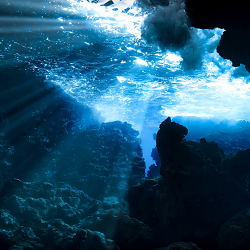
Particulate and granular flows in the ocean—including suspended sediment plumes, turbidity currents, coastal sediment transport, deep-sea mining plumes, and particle-laden multiphase flows—are governed by fluid dynamics, granular mechanics, and hydrodynamics. These flows drive sediment redistribution, contaminant transport, and carbon burial across marine environments while exhibiting strong nonlinearity, multiscale structures, interfacial instability, non-Newtonian effects, and complex particle–fluid interactions.
Recent advances in multiphase flow theory, computational hydrodynamics, and artificial intelligence (AI), including physics-informed neural networks, Bayesian inference, operator learning, and multiscale modeling, provide new approaches for predicting complex particulate and granular flow systems.
Aligning with the scope of Physics of Fluids, this Special Issue welcomes theoretical, computational, and experimental studies advancing the fluid physics of oceanic particulate and granular flows, including sediment transport, turbidity currents, deep-sea mining plumes, instability and mixing, rheological effects, numerical methods, experimental investigations, and physics-informed predictive modeling.
Topics covered include, but are not limited to:
- Particulate flows
- Granular flows
- Multiphase flows
- Suspended sediment transport
- Turbidity currents
- Coastal sediment dynamics
- Deep-sea mining plumes
- Particle-laden flows
- Interfacial instability
- Non-Newtonian flows
- Computational hydrodynamics
- Physics-informed neural networks
- Operator learning
- Multiscale modeling
- Marine environmental fluid dynamics
Guest Editors
Dr. Zhuangcai Tian, Ocean University of China, China
Dr Jinran Wu, The University of Queensland, Australia
Dr. Xiujun Guo, Ocean University of China, China
Dr. Bin Zhu, China University of Mining and Technology, China
Dr. Jingxin Wu, Ocean University of China, China