

Selecting the right journal isn’t just about where your work can be published. It’s about where it will be the most read, the most cited, and where it has the potential to make the biggest impact on your field of research and the scholarly record.
Understanding Citation-based Scientific Journal Metrics
“There’s no single metric that can give you a complete picture of a journal’s quality. Typically, it’s a combination of measurable factors—along with the journal’s reputation and advice from peers and mentors—that will help guide you to the right choice.” —Melissa Patterson, Ph.D., Head of Journal Development, AIP Publishing
Journal Impact Factor (JIF), Cited Half-life, CiteScore, Eigenfactor and journal article metrics such as h-index and g-index rankings can help you assess a journal’s visibility and influence. These common publication metrics will help you focus on the right journals and maximize the potential reach and relevance of your work.
Metrics offer valuable insight into how research circulates, but each measure something different. Understanding what they capture, and what they cannot measure, will help you make a well-informed decision about where to submit your work.
Journal Impact Factor: What it measures and why it matters
Journal Impact Factor (JIF) is a metric which many institutions, funders, and researchers use as a benchmark to indicate if a journal is reputable and influential—and it’s a compelling metric to consider when selecting a home for your research. The JIF tells us how often researchers are referencing the work in a journal, and it can help you estimate how much visibility your article might receive.
Just recently, Clarivate, the company that publishes the Journal Citation Reports® reporting the JIF data, decided to exclude any retracted or withdrawn articles from the standard calculations. A move clearly intended to support research integrity standards. This change has only a slight effect on journal metrics and it will have the long-term effect of building trust that the metric is a transparent representation of a journal’s overall impact.[1]
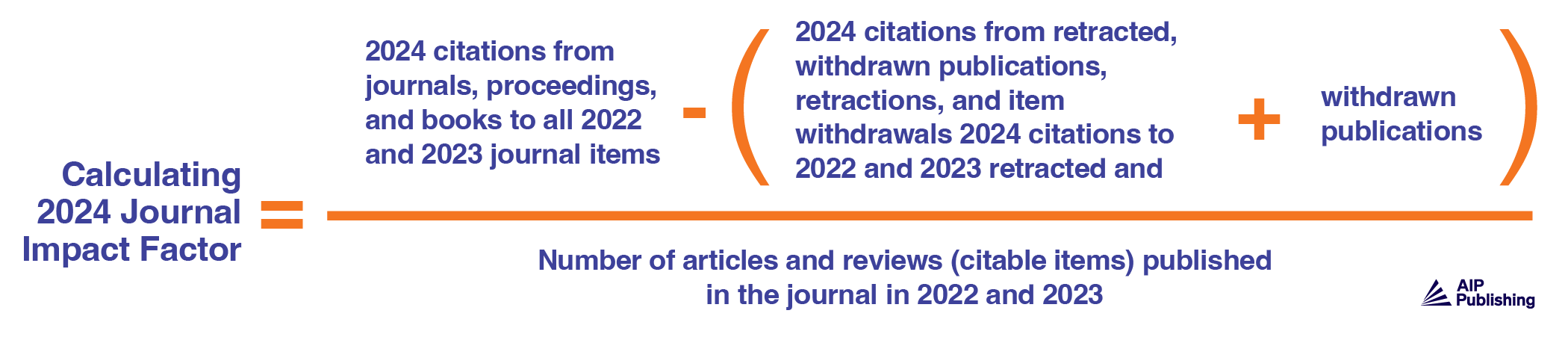
JIFs are only calculated for certain journals in the Web of Science database, and large journals tend to have higher impact factors.[2] It measures only citations and doesn’t account for other forms of impact such as journal reputation or the quality of individual articles.
TIP: Don’t just look to publish in larger journals with high impact factors if your audience doesn’t publish the bulk of their work in that journal.
Understanding what Cited Half-life reveals about a journal
Cited half-life measures the median age of articles cited in a given year. A longer cited half-life means a journal tends to receive more citations to older content while a shorter cited half-life means that newer content is receiving more citations. While a shorter cited half-life suggests that its content is cited more quickly and is closely tied to fast-moving areas of research, it helps illuminate how long research remains influential within a field.
Journals with a long cited-half life may publish either foundational or highly specialized research which continues to be relevant long after initial publication. Conversely, journals in rapidly evolving disciplines may have shorter cited half-lives because new findings quickly replace older insights.
CiteScore: Assessing visibility and reach
A journal’s CiteScore measures the frequency an average article in a journal was cited in a three-year period.[3] This metric is calculated for certain journals in the Scopus database. Like JIFs, larger journals in broader disciplines typically have higher CiteScores.[4]
Tip: Depending on the focus of your research, your manuscript may be a better fit for a smaller journal that specializes in your topic and reaches the right audience, even if its CiteScore is lower than that of larger journals.
Eigenfactor: A broader view of journal impact
An Eigenfactor score measures the number of times articles from a particular journal published in the past five years that were cited in the Journal Citation Reports. Unlike the JIF, the Eigenfactor Score measures the total number of citations a journal receives.[5]
It also:
- Weights each reference according to an estimate of the amount of time researchers spend reading the journal
- Counts citations to journals in the sciences and social sciences
- Measures total citations rather than citations per article
- Excludes self-citations
The more articles a journal publishes, the higher its Eigenfactor score is likely to be. However, this doesn’t necessarily mean a smaller journal lacks quality.[6] It simply may focus on a specific topic that doesn’t generate a high volume of research each year, but it remains vitally important to its target audience.
Understanding Author and Article-Level Indicators
While journal-level metrics provide a strong starting point, looking deeper at journal article metrics and author-level indicators can give you an even more nuanced picture of where your research might make the most impact.
Citation Analysis: Understanding a journal’s reach
Citation analysis helps you see how often a journal’s articles are referenced by other researchers. A high citation rate signals influence, suggesting that the journal’s work is being read and built upon within your field. Before submitting, check citation data to gauge a journal’s relevance to your area of study. If its published articles are cited by peers in your discipline, it’s likely a good fit for your work.
Tip: Tools like Web of Science and Scopus allow you to perform quick citation analyses to compare journals side by side.
h-index and g-index: Gauging consistent impact
Beyond raw citation counts, metrics like the h-index and g-index measure the sustained influence of authors.
- The h-index balances productivity and impact by identifying how many papers have received at least h citations each. For example, if an author has an h-index of 12, it means they have 12 papers which each have 12 citations or more. The g-index places more weight on highly cited papers, highlighting consistent, high-impact performance.
- The g-index is the largest number of articles published by an author where the top g papers have at least g2 citations combined. Put another way, an author who has a g-index of 20 has 20 papers which, in aggregate, have been cited at least 400 times.
For researchers, these metrics help determine whether a journal regularly publishes quality work that continues to shape discussions in your field.
Usage and Download Data: Measuring reader engagement
While citations show long-term impact, usage data, such as the number of downloads or views and article receives, provides a look at reader interest. If your goal is to increase visibility and accessibility, usage data can help you identify journals that actively engage their audience. This metric is especially valuable for open access journals, where downloads and readership can reflect a paper’s real-world reach among readers who may not have access to journal content through institutional subscriptions.
Putting it all together
No single journal metric can define a journal’s quality or fit for your work. The best publishing decisions come from combining quantitative data—like JIF, CiteScore, Eigenfactor, and citation analysis—with qualitative factors, such as scope, audience, and reputation. By taking time to review these measures, you’ll not only identify journals that align with your research goals but also give your work the best chance to reach the readers who matter most.
Find the right journal for your work
 Want to learn more? Download the complete publishing guide, “Expert Advice: Selecting the Right Journal to Publish Your Research” featuring Melissa Patterson, Ph.D., Head of Journal Development
[1] Clarivate.com/academia-government/blog/the-upcoming-jounal-citation-reports-release-and-changes-to-uphold-research-integrity-in-2025/
[2][3] libguides.csudh.edu/metrics/journal
[4][5][6] lib.guides.umd.edu/bibliometrics/eigenfactor