

Identifying a journal audience for your research is one of the most important steps in the publication process. The right journal selection strategy ensures your research is seen by the scholars, practitioners, and decision-makers most likely to read, cite, and build upon your work and where your research can make the greatest impact.
Why Audience Matters in Journal Selection
A strong journal selection strategy begins by asking: Who benefits most from the research I want to communicate? How to find the right journal audience for your research is a critical first step to consider. Where are researchers in your field publishing their work? What articles do they cite? Which journals have editors and peer reviewers whose expertise aligns with your topic? These are all great questions to ask yourself when selecting a journal with the right readership.
Understanding your audience ensures you choose a publication that maximizes visibility, strengthens your scholarly profile, and increases the likelihood of citations, an essential factor for maximizing research impact. These questions form the foundation of any effective journal selection strategy.
Using Tools to Find Your Target Audience

Once you’ve narrowed your options, research tools can help you identify journals with the strongest alignment.
- Using citation analysis to choose a journal (Google Scholar, Scopus, Web of Science): These tools highlight where influential articles are published and which journals dominate citations in your research area.
- Review reference lists: Highly cited papers often reveal journals that are central to your field’s scholarly conversation.
- Explore author profiles (ORCID, ResearchGate): See where leading researchers in your field publish. Their patterns often point to journals your audience reads and respects.
- Ensure scope alignment: Submitting a manuscript outside the scope is a major cause of desk rejection even when the science is strong so checking a journal’s “aims and scope” is essential. If you’ve targeted a journal but aren’t quite sure if your work is in scope, it can be helpful to look through related research that was published in that journal to ensure the fit is right for your work.
Review AIP Publishing’s journal specific requirements.
Leverage Your Network for Feedback
“Talk to colleagues in your field who have experience publishing on similar topics. They can help you identify the journals where work like yours is read, cited, and built upon by the community.” —Melissa Patterson, Ph.D., Head of Journal Development
One of the most effective ways to help you choose the right journal is to consult your professional network. Peer insights help ensure you avoid mismatched submissions and choose a journal to maximize citation potential.
These conversations often reveal:
- Trusted journals within your subfield
- New or emerging publications
- Insights into typical peer review timelines
- Editorial responsiveness
- Personal experiences with specific journals
Build Your Network for Greater Visibility
Engaging with your research community both online and in person helps you learn where others publish and what journals are most visible to your audience.
Ways to broaden your reach:
- Use research-focused social media. Comment on trending topics, share noteworthy papers, and highlight where influential work is being published. Platforms like LinkedIn, Bluesky, Facebook, ResearchGate and other social platforms for researchers can help you build research visibility.
- Attend conferences. They offer valuable insight into where key discoveries are being shared and which journals are shaping your field.
- Present posters or talks. These interactions increase visibility and help you learn where peers are submitting their work.
- Engage with editorial board members. These conversations often reveal what types of submissions stand out and how novelty and rigor are evaluated.
- Become a peer reviewer. Reviewing manuscripts strengthens your understanding of a journal’s expectations and helps build your professional reputation. Find out about the peer review process at AIP Publishing.
TIP: After publication, these same channels help you promote your article and help boost readership, citations, and long-term impact.
Identifying Different Journal Audiences
Your manuscript’s focus strongly influences which journal will be the best fit. A work designed for a specialized academic niche may require a different publication strategy than one intended for interdisciplinary readers or researchers working in industry.
If Your Research Is Highly Specialized
For specialized or niche studies, the most suitable readership may be found in smaller, discipline-focused journals.
- These specialized communities are often more likely to send a paper out for review, so the odds are better that you at receive feedback from a reviewer
- Explore across your field’s ecosystem, not just high Journal Impact Factor titles. Publishing in niche journals and society publications often offer deeply engaged readerships and strong peer communities.
- Academic researchers often benefit from journals where the audience already understands the nuances of their topic. Specialized journals are especially valuable for authors trying to reach experts who can evaluate their findings with the right context and provide high-quality, constructive peer review.
If Your Research Has Broader Applications
- Consider interdisciplinary journals or broader-scope publications.
- These journals help communicate results to non-specialists and expand your reach across related fields.
- Society publishers may also have widely respected titles serving specific scientific communities.
This approach is particularly effective for authors who want their work seen by diverse audiences, whether in academia, government, or industry.
If You’re Preparing for Career Advancement
- Choosing the right journal can support career goals, including new positions, promotions, and grant applications.
- Speak with department chairs, hiring committees, or Principal Investigators to learn which journals carry influence. Understand what metrics or journal attributes are important or if total accrued citations may be a factor in hiring decision.
- For industry roles, connect with hiring managers or mentors who can explain how journal prestige is evaluated during recruitment.
Understanding how your target audience and potential employers value certain journals can help ensure you submit your manuscript where it will matter most.
Strategic Journal Selection Leads to Higher Impact
By analyzing citation patterns, speaking with experienced researchers, and exploring both niche journals and broader interdisciplinary publications, you can select a journal that increases your chances of acceptance, strengthens your visibility, and enhances your long-term citation impact. Combining this strategy with strong networking—through social media, conferences, and peer review—helps ensure your research reaches the right audience while advancing your career in academic publishing.
Find an AIPP journal for your work
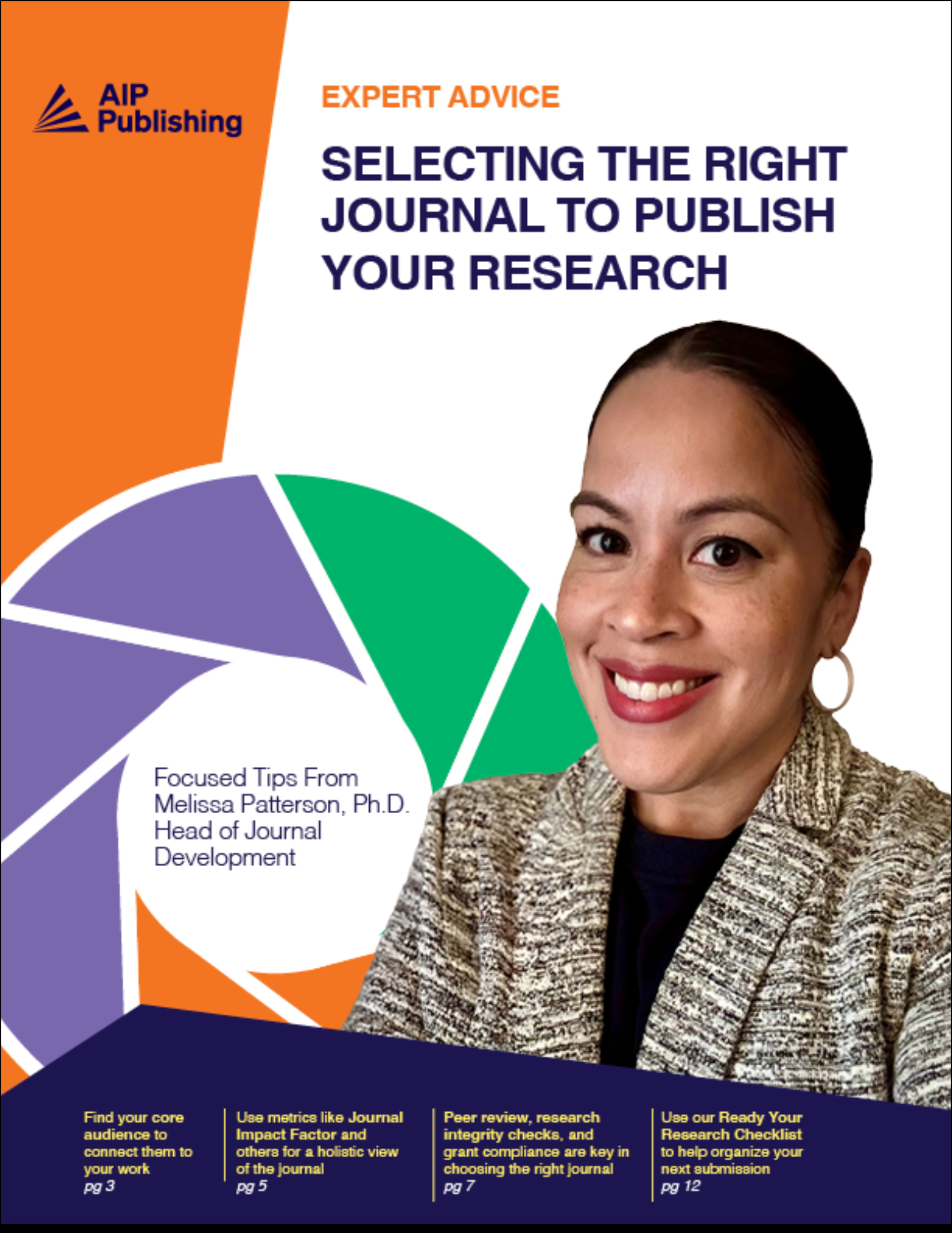 Want to learn more? Download the complete publishing guide, “Expert Advice: Selecting the Right Journal to Publish Your Research” featuring Melissa Patterson, Ph.D., Head of Journal Development