
Plasma Processing of Thin Films and Nanomaterials
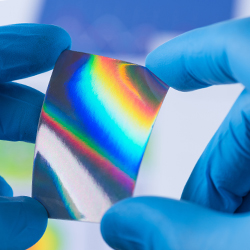 Plasma-based techniques remain at the forefront of materials science, providing unique non-equilibrium environments that enable the synthesis and modification of materials with atomic-scale precision. As the demand for next-generation electronic, energy, and sensing devices grows, understanding the fundamental interactions between plasmas and surfaces becomes increasingly critical. This collection aims to highlight recent breakthroughs in plasma chemistry, physics, engineering, plasma-surface interactions, modeling, and diagnostics, as applied to the creation and structuring of advanced thin films and nanostructures. featuring articles dedicated to the fundamental understanding and practical application of plasma-enhanced processes, contributions explore the deposition, etching, and functionalization of thin films, as well as the synthesis of nanomaterials across various dimensions. The collection bridges the gap between fundamental plasma physics and the practical challenges of material integration, such as uniformity over large areas, defect density control, and thermal budget constraints.
Topics covered include, but are not limited to:
- Plasma-Enhanced Deposition: Advancements in Plasma-Enhanced Chemical Vapor Deposition (PECVD) and Plasma-Enhanced Atomic Layer Deposition (PEALD).
- Nano-fabrication and Etching: Atomic layer etching (ALE), reactive ion etching (RIE), and high-aspect-ratio patterning for logic and memory devices.
- Nanomaterial Synthesis: Plasma-based growth of carbon nanotubes, graphene, nanowires, and quantum dots.
- Surface Engineering: Plasma treatment for surface activation, functionalization, and interface engineering of polymers, metals, and semiconductors.
- Plasma Diagnostics and Modeling: In situ characterization and computational modeling of plasmas and plasma-surface interactions.
- Atmospheric Pressure Plasmas: Applications in thin film coating, flexible electronics, and biomaterials.
- Sustainable Processing: Energy-efficient plasma processes and the development of eco-friendly precursor chemistries.
- Use of Machine Learning and Artificial Intelligence in Plasma-Related Research: Emerging use of machine learning and AI in all areas related to plasma-related research.
Guest Editors
Jane P. Chang, University of California, Los Angeles
Uwe Kortshagen, University of Minnesota
Masaru Hori, Nagoya University
Andre Anders, Plasma Engineering LLC
Manuscript Details & Submission
Authors are encouraged to use the JVST article template. Submission information can be found here. During submission, you will have an opportunity to indicate that your paper is a part of this collection by choosing the Special Topic or Conference Collection on “Plasma Processing of Thin Films and Nanomaterials”