
Defects in Semiconductors 2027
Submission Deadline: January 31, 2027Contribute to this Special Topic
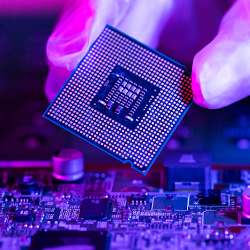 Understanding the role of defects in semiconductors and how to detect and control them is critical to advances in modern electronics as well as to the development of future technologies such as quantum and neuromorphic computing. Advances in synthesis, thin-film growth, microscopy, spectroscopy, and theory have led to new insights into how defects behave in semiconductors and low-dimensional materials, improving performance in a wide range of applications such as integrated circuits, photovoltaics, light-emitting diodes, laser diodes, and quantum information technology. This Special Topic on Defects in Semiconductors provides a valuable forum where researchers can share their latest and most innovative findings related to the fundamentals of defects in semiconductors.
Topics covered include, but are not limited to:
- Silicon, Germanium, Silicon Carbide, and Diamond
- Nitrides and Other III-V Materials
- Oxides and Other Chalcogenide Semiconductors
- Organic Semiconductors and Perovskites
- 2D Semiconductor Materials
- Low-Dimensional Semiconductor Structures
- Defects for Quantum Information
- Defect-Assisted Neuromorphic Computing
- Defect-Induced Electrical, Magnetic, Thermal, and Optical Properties
- Theory, Computational Methods, and Experimental Methods for Characterization and Understanding of Defects
Guest Editors
Laurie McNeil, The University of North Carolina at Chapel Hill
Rachel S. Goldman, University of Michigan
Yury Turkulets, University of Michigan
Submission Deadline: January 31, 2027Contribute to this Special Topic