
At the crossroads of molecular spin studies and applications
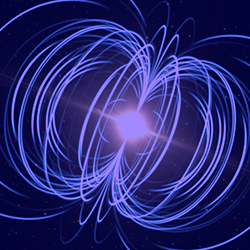
Three decades after the discovery of the paradigmatic cluster magnet Mn₁₂-acetate, a renewed and critical perspective on molecular magnetism is both timely and warranted. Next generation room-temperature singlet–triplet qubit molecular spin materials—including single molecule magnets, vanadyl moieties, nitrogen-vacancy centers in diamond, free radicals, and spin-correlated radical pairs—bring the long-standing vision of quantum sensing and quantum computing closer to reality. This progress becomes possible as interdisciplinary fields such as quantum materials science, spin chemistry, quantum biology, and related research areas converge.
This Special Issue provides a platform for such integration. The topic,
“At the Crossroads of Molecular Spin Studies and Quantum Applications,”
highlights state-of-the-art advances in the control of photoinduced electron transfer and radical pair mechanisms, correlated spin interconversion and relaxation, chirality effects, quantum Zeno effects, and excited-state phenomena. Particular emphasis is placed on computational, synthetic, and experimental methodologies for simulating, probing, and exploiting nonadiabatic dynamics, electron–phonon interactions, ultrafast spectroscopy, and quantum coherence effects.
Topics covered include, but are not limited to:
- Singlet-triplet qubit molecular spin materials
- Single Molecule Magnets
- Spin correlated radical pairs
- Quantum sensing
- Quantum computing
- Quantum transfer
Guest Editors
Juan Bartolome, INMA, CSIC, Universidad de Zaragoza, Academy of Sciences of Zaragoza, Spain
Valentyna Sirenko, B. Verkin Institute for Low Temperature and Engineering, National Academy of Sciences of Ukraine
Submission Instructions:
Articles published in Low Temperature Physics are freely accessible without any publication charge. The open access publication fee is funded by Tianjin University. Users are free to share and adapt the material in any format, provided appropriate credit is given.