
Biological Ice Nucleation
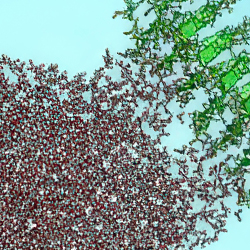 Ice nucleation is a fundamental interfacial process with far-reaching consequences for atmospheric science, agriculture, cryobiology, and food technology. Biological ice nucleating particles, produced by bacteria, fungi, pollen, algae, and other organisms, are among the most efficient ice nucleators known, capable of triggering ice formation more efficiently than any other known material. At the molecular level, biological ice nucleation is a surface phenomenon: ice nucleating proteins and macromolecules organize water molecules into ice-like structures at the protein–water interface. Understanding these interfacial processes, from the structure and assembly of ice nucleating proteins to the interaction between biological particles and water at the nanoscale, is essential for advancing both fundamental science and practical applications.
This collection brings together researchers working across the disciplines that converge on biological ice nucleation.
Topics covered include, but are not limited to:
- Quantitative characterization of biointerfaces under mechanical stimuli
- Ice Nucleation by Pollen, Fungal Spores, Algae, and Other Biological Materials
- Interfacial Characterization Techniques Applied to Biological Ice Nucleation
- Ice Nucleation in Cryobiology, Food Science, and Cryopreservation
- Computational Modeling and Simulation of Biological Ice Nucleation at Interfaces
- Applications in Agriculture, Cloud Seeding, and Atmospheric Intervention
Guest Editors
Kai Finster, Aarhus University
Tina Santl-Temkiv, Aarhus University
Hinrich Grothe, TU Wien
Peter Davies, Queen’s University