
Manipulating the structure and stability of glasses
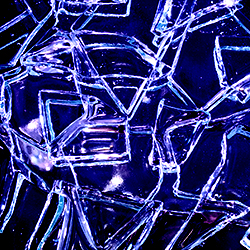 Glasses are inherently non-equilibrium materials whose structures and thermodynamic stabilities can vary widely because of diverse local packing arrangements and preparation pathways. This special topic brings together theory, computation, and experiment across molecular, polymeric, metallic, oxide, colloidal, and other glass-forming systems to identify unifying chemical-physics concepts governing glass formation, relaxation, aging, stability, and structure–dynamics relationships. The issue highlights contributions that advance fundamental understanding and/or develop new strategies to manipulate glass structure and stability.
Topics covered include, but are not limited to:
- Metallic glasses
- Oxide and network glasses
- Organic molecular glasses
- Polymer glasses
- Colloidal glasses and soft glassy materials
- Active and biological glasses
- Complex dynamical networks displaying glassiness
- Physical aging and rejuvenation
- Nonequilibrium preparation pathways and kinetic protocols
- Ultrastable glasses
- Highly equilibrated simulated glasses
- Anisotropic glasses and vapor-deposited glasses
- Structure–dynamics–stability relationships
- Glass formation under external fields / pressure / shear
- Glass interfaces / surfaces / confinement effects
Guest Editors
Mark D. Ediger, University of Wisconsin-Madison, Madison, Wisconsin, USA
Peng Luo, Institute of Physics, Chinese Academy of Sciences
Kristine Niss, Roskilde University
Bu Wang, University of Wisconsin-Madison
Taiki Yanagishima, Tokyo Metropolitan University