

Little is known about how sensitive the Kemp’s ridley sea turtle is to human noises.
From the Journal: The Journal of the Acoustical Society of America
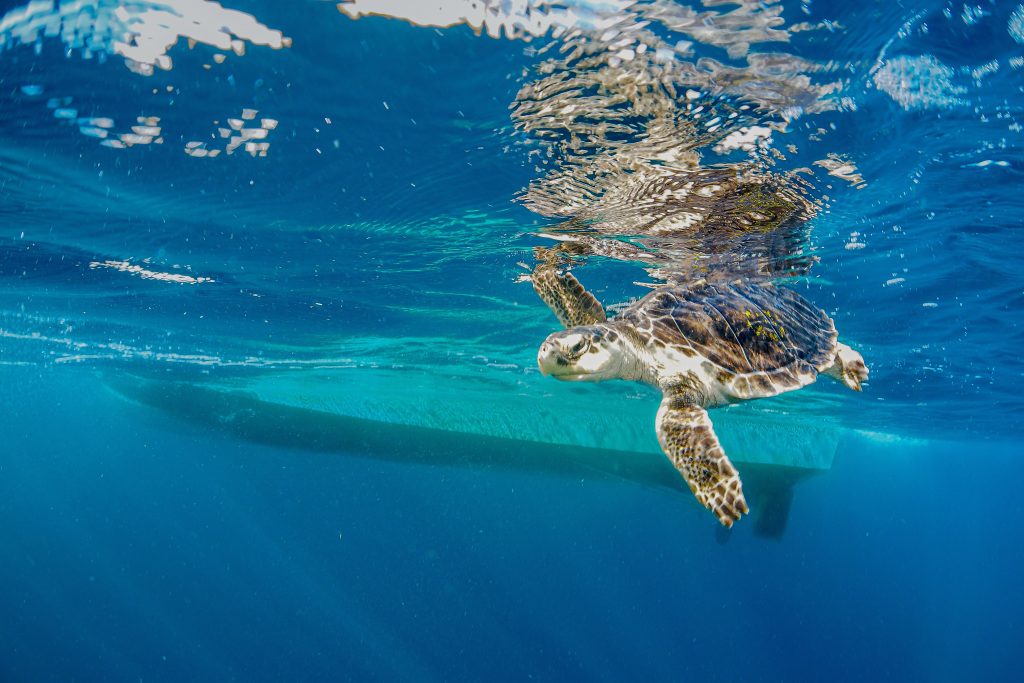
WASHINGTON, Feb. 3, 2026 — Kemp’s ridley sea turtles are among the most endangered species of sea turtles in the world. They reside along the east and Gulf coasts of North America, alongside some of the world’s most active shipping lanes. While the threats from fishing, pollution, and vessel collisions are well understood, it is less clear how disruptive human-caused noise is to their survival.
In JASA, published on behalf of the Acoustical Society of America by AIP Publishing, researchers from Duke University Marine Laboratory, the National Oceanic and Atmospheric Administration, and North Carolina State University evaluated the hearing sensitivity of a group of Kemp’s ridley turtles to understand their vulnerability to human-caused noise.
“They face a variety of threats, including accidental capture in fishing gear, vessel strikes, ingestion of plastic debris, and degradation of nesting beaches and coastal habitat,” said author Charles Muirhead. “Because they occupy nearshore and shelf waters of the Gulf Coast and western North Atlantic — areas with intense human activity — they are frequently exposed to overlapping stressors throughout much of their life cycle.”
Like many sea creatures, Kemp’s ridleys are sensitive to sound. Sound waves, especially low frequency waves produced by ships and other machinery, travel long distances underwater, and they tend to overlap with the sounds these animals rely on for navigating their environment.
To evaluate their hearing range, the researchers placed noninvasive sensors on the turtles’ heads and measured the electrical signals transmitted along their auditory nerves. They played sounds ranging from 50 hertz — close to the low end of human hearing — all the way up to 1,600 hertz. They found that the turtles could hear best at around 300 hertz, and their hearing started to decline at higher frequencies.
“Our findings indicate that the turtles are most sensitive in the same low-frequency band where much industrial and vessel noise occurs,” said Muirhead. “This does not automatically mean that harmful effects are occurring, but it highlights where further monitoring and targeted impact studies should be focused.”
Next, the researchers plan on studying how sea turtles respond to sounds in real environmental conditions, as well as understanding the relationship between the measured sound signals and the physical effects of noise on turtles.
“These efforts will help refine our understanding of how human-caused noise interacts with sea turtle sensory systems. They will also support evidence-based management approaches aimed at minimizing unintended impacts while balancing human activities in coastal and offshore waters,” said Muirhead.
###
Article Title
Underwater hearing sensitivity of the Kemp’s ridley sea turtle (Lepidochelys kempii)
Authors
Charles A. Muirhead, Wendy E.D. Piniak, Douglas P. Nowacek, and Craig A. Harms
Author Affiliations
Duke University Marine Laboratory, the National Oceanic and Atmospheric Administration (NOAA), and North Carolina State University