
Applied Physics Letters is proud to welcome eight new members to our Early Career Editorial Advisory Board who will serve for the next two years. We want to recognize and hear from these rising leaders to ensure the journal evolves in step with the community it serves. Our Early Career Editorial Advisory Board allows us a direct channel for dialogue, mentorship, and collaboration.
The 2026 appointees were selected by a committee of current Editorial Advisory Board members following a competitive application process. Please join us in welcoming the newest members.

Daniel Finkelstein-Shapiro
Institute of Chemistry
Universidad Nacional Autónoma de México (UNAM), Mexico
Dr. Daniel Finkelstein-Shapiro received his B.A. in Physics from Cornell University and his Ph.D. in Chemistry from Northwestern University. He carried out postdoctoral research at Arizona State University, Université Pierre et Marie Curie (Paris), and Lund University before joining the Department of Physical Chemistry at the Instituto de Química, UNAM, in 2020. His research group investigates light–matter interactions in atoms, molecules, and nanomaterials, with emphasis on weak intermolecular forces, hybrid light–matter states, optical coherence, and the structural and dynamical signatures of excited states. The laboratory integrates synthesis with advanced spectroscopies—from NMR to ultrafast optical methods—to connect spectral responses with nanoscale structure and dynamics. This experimental program is supported by a theoretical effort on open quantum systems and the development of new multidimensional spectroscopy protocols.

Hsin-Zon Tsai
National Cheng Kung University (NCKU), Taiwan
Dr. Hsin-Zon Tsai is an Assistant Professor in the Department of Physics at National Cheng Kung University (NCKU). His research explores quantum materials and nanoscale devices, developing atomically precise, gate-tunable platforms and combining local probe microscopy with device-level measurements to connect atomic-scale structure to device function. He focuses on how controlled atomic-scale engineering can reshape electronic behavior and enable new approaches to electronics, sensing, and information processing. His interests focus on bridging fundamental quantum phenomena with practical device concepts through the integration of bottom-up assembly and top-down microfabrication.
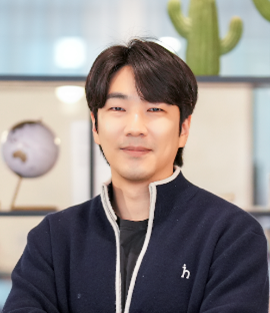
Jimin Kwon
Ulsan National Institute of Science and Technology (UNIST), South Korea
He is an assistant professor in the Department of Electrical Engineering at Ulsan National Institute of Science and Technology (UNIST). He earned his MS and PhD degrees from Pohang University of Science and Technology (POSTECH), focusing on RF/analog CMOS IC design and TFT circuits, respectively. Previously, he conducted postdoctoral research at Stanford University, exploring advanced upper-layer logic and memory devices utilizing carbon nanotubes and oxide semiconductor materials for monolithic 3D (M3D) integration. His current research focuses on emerging heterogeneous integration technologies, i.e., M3D and advanced packaging technologies.

Lili Ding
Sun Yat-sen University, China
Lili Ding received her PhD in condensed matter physics from Sun Yat-sen University (China). She focused on the regulation of polar microstructure and electrical transport properties in ferroelectric material. After that, she did as a postdoctoral researcher at Dresden University of Technology (Germany), where she first added light that contains non-invasive and ultra-fast features into the control of domain structure and conductance in ferroelectric materials. Meanwhile, she built an innovative experimental platform for the co-interaction of optical loading and scanning probe technology, aiming to characterize the differences in the electrical conduction behavior of domain walls under different illumination conditions. It brings new possibilities to realize the application and development of the optomanipulation-related electronic devices in ferroelectric material.

Wen-Hui (Sophia) Cheng
National Cheng Kung University (NCKU), Taiwan
Wen-Hui (Sophia) Cheng is an Assistant Professor in the Department of Materials Science and Engineering at National Cheng Kung University in Taiwan. She received her B.S. and M.S. degrees from National Cheng Kung University in Taiwan and pursued her Ph.D. at Caltech, all in Materials Science. During her Ph.D. research, under the guidance of Prof. Harry Atwater, she focused on the mesoscale design of photoelectrochemical fuel cells as part of the Joint Center for Artificial Photosynthesis (JCAP). Afterward, she joined Professor Dionne’s group as a Postdoctoral Fellow at Stanford University. She has extensive experience in semiconductor nanofabrication and material characterization, as well as optical simulations and device physics. She has developed an integrated device for splitting water using sunlight to produce hydrogen fuel, and a gas diffusion electrode for CO2 reduction, generating CO from solar energy, both with record efficiencies at the time. These efforts have been recognized with the MRS graduate student silver award and the Dow Sustainability Innovation Student Challenge award. Prof. Cheng’s research interests include manipulating light to chemistry for energy applications and engineering structures for optoelectronics as a material scientist. She has won awards such as Yushan Young Scholars, 2030 Rising Scholars Program, and The Rising Stars – Women in Engineering.
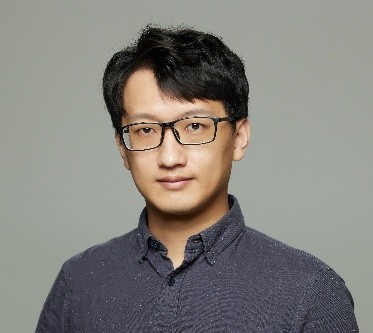
Yen-Lin Huang
National Yang Ming Chiao Tung University (NYCU), Taiwan
Dr. Yen-Lin Huang is an Assistant Professor in the Department of Materials Science and Engineering at National Yang Ming Chiao Tung University (NYCU). He received his B.S. and M.S. degrees in Materials Science and Engineering from National Tsing Hua University in 2009 and 2011, respectively, and earned his Ph.D. in Materials Science and Engineering from National Chiao Tung University in 2017. From 2017 to 2019, Dr. Huang was a Postdoctoral Research Fellow in the Materials Sciences Division at Lawrence Berkeley National Laboratory, where he conducted research on oxide interfaces and emergent electronic phases. He later joined TSMC North America as a Principal Engineer in the Corporate Research Advanced Spintronics Technology Group (2019–2021), working on next-generation non-volatile memory technologies and industry-scale process integration. Since joining NYCU, Dr. Huang’s research has focused on ferroelectric thin films, spin–orbit torque devices, oxide heterostructures, and wafer-compatible materials engineering for next-generation memory and computing. As of the end of 2025, he has published over 50 peer-reviewed papers, which have been cited more than 3,100 times (h-index: 26; i10-index: 40). He has delivered ~10 invited talks and serves as a referee and guest editor for multiple international journals.

Zhou Liu
Shenzhen University, China
Zhou Liu is an Associate Professor in the College of Chemistry and Environmental Engineering at Shenzhen University. His research lies at the intersection of microfluidics, soft matter physics, and biomedical engineering, focusing on the design of droplet-based and coacervate microreactors for chemical, medical, and industrial applications. Dr. Liu has authored over 50 peer-reviewed publications and holds multiple Chinese, U.S., and European patents, two of which received silver medals at the Geneva International Exhibition of Inventions. He earned his Ph.D. in Mechanical Engineering from The University of Hong Kong in 2015 and joined Shenzhen University in 2016. His honors include the APL Rising Star (2024), the CIESC Second Prize in Basic Research (2022), Guangdong Youth Top Talent (2024), and the Shenzhen Excellent Young Scientist Award (2023).
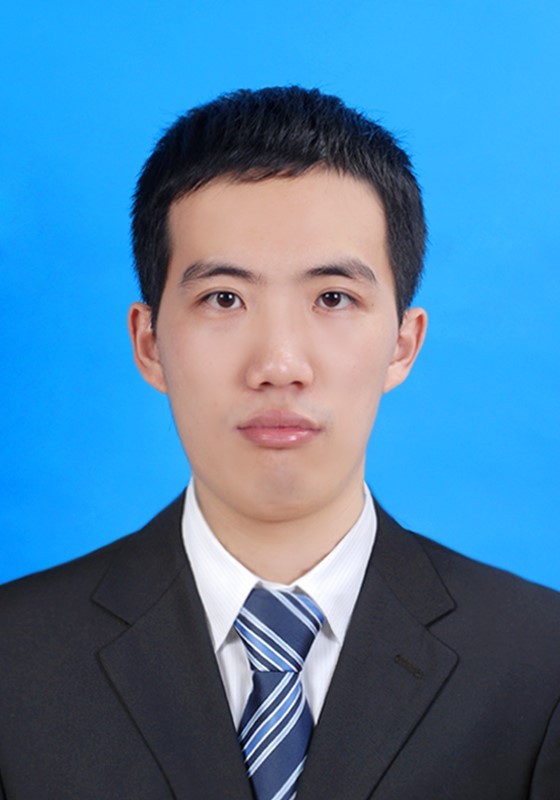
Chenjun Wu
La Scuola Superiore Sant’Anna (SSSUP), Italy
Chenjun Wu is a postdoctoral researcher at The BioRobotics Institute, Scuola Superiore Sant’Anna, Italy, working with Prof. Arianna Menciassi. He received his PhD in Mechanical Engineering from Tohoku University, Japan, under the supervision of Prof. Takuji Ishikawa, and a PhD in Materials Science from Zhejiang University, China. His research focuses on magnetically actuated microrobots and microswimmers in complex biological fluids, with particular emphasis on low-Reynolds-number hydrodynamics and fluid–structure interactions, as well as clearance mechanisms in biofilm-associated systems.
We look forward to working with all these exceptional scientists over the next two years as members of our valued advisory board.
We encourage interested researchers to apply for a seat on the Early Career Editorial Advisory Board next year. For more information about the full early career board, please visit our informational page or contact us at apl-journalmanager@aipjournals.org
About Applied Physics Letters
Applied Physics Letters (APL) is dedicated to the rapid publication of new and significant findings across all areas of applied physics, with a focus on impactful, cutting-edge research that enables innovative applications across science, engineering, and technology.