
Open Science Through the Years
For more than two decades, AIP Publishing has explored new ways to make research easier to access, share, and build upon. Our approach has evolved alongside the needs of researchers, libraries, publishing partners, and the wider scholarly community.
From early support for e-print sharing to new journals, policies, partnerships, and publishing models, these milestones capture some of the ideas we have tested, choices we have made, and lessons we have learned along the way.
Explore Key Moments in Our Open Science History
2000 — Early Support for Sharing on E-Print Servers
An AIP Conference Proceedings copyright agreement permitted authors to post and update their work on e-print servers—an early foundation for green open access.
2005–2006 — Introducing Open Access Choice for Authors
AIPP introduced Author Select in Review of Scientific Instruments, Journal of Mathematical Physics, and Chaos, giving authors the option to publish their articles open access in an AIP journal. The first Author Select article was published later that year, and the option expanded across the journal portfolio in 2006.
2011–Present — Developing New Open Access Journals and Partnerships
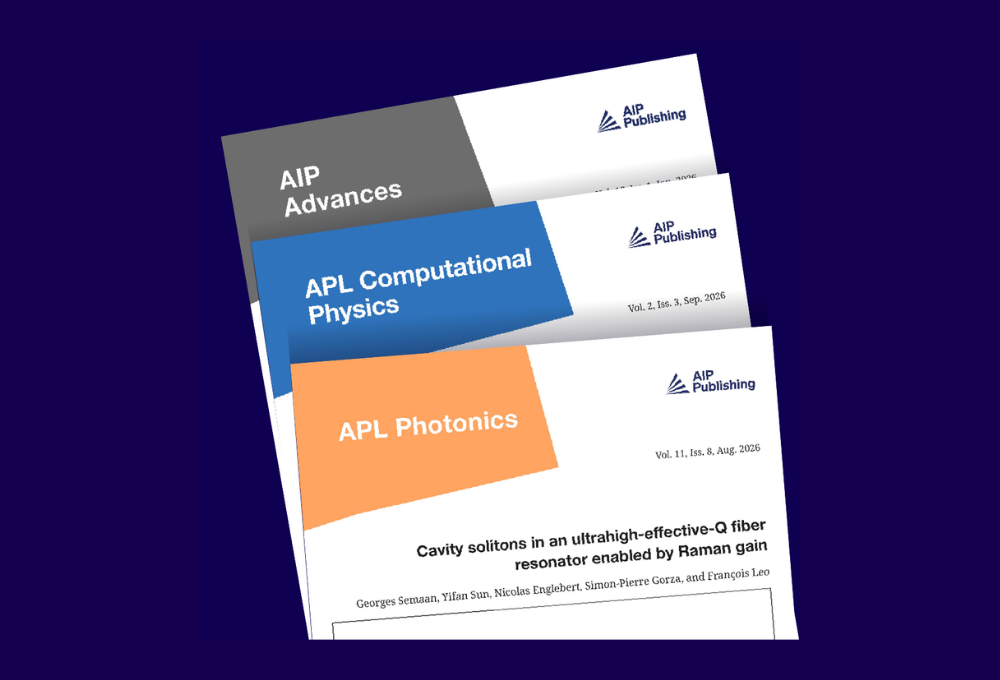
Beginning with AIP Advances in 2011, AIP Publishing launched 12 gold open access journals across established and emerging fields, from materials science and photonics to machine learning and quantum science. From 2019, we also worked with publishing partners to develop five partner-supported diamond open access journals, with publishing costs covered by those partners so that neither readers nor authors pay. These launches reflect the range of approaches and partnerships through which we have explored open access publishing.

2013–2014 — Supporting Public Access Through CHORUS
AIPP became a founding participant in CHORUS, helping build infrastructure that makes federally funded research publicly accessible while supporting compliance with funder requirements. In 2014, we began implementing the metadata, hosting, and archiving systems needed to support it.

2016 — Expanding Author Rights and Sharing
AIPP replaced its copyright transfer agreement with a new License to Publish for all subscription articles, allowing authors to retain copyright and immediately share accepted manuscripts on websites, repositories, and scholarly networks—with no embargo or fee.

2017–2023 — Opening Citations and Abstracts
AIPP joined initiatives to make more of the scholarly record openly available and machine-readable. In 2017, we opened reference data from more than half a million articles through the Initiative for Open Citations. We later joined the Initiative for Open Abstracts; by 2023, 95% of AIP Publishing abstracts were open through Crossref.

2019 — Read & Publish Agreements
AIPP piloted Read & Publish agreements with two leading institutions: the University of Vienna in Austria and Waseda University in Japan, combining journal access with fee-free open access publishing for eligible authors.
2020 — Introduced a Data Availability Policy
AIPP introduced a portfolio-wide Research Data Policy requiring Data Availability Statements in research articles. The policy also encouraged authors to deposit underlying datasets in public repositories and formally cite them in their reference lists. When APL Machine Learning launched in 2023, it introduced a stronger open-data policy requiring authors to make supporting data, code, and supplementary materials publicly available; APL Computational Physics adopted the same requirement when it began publishing in 2025.

2023 — Expanded Waivers and Discounts
To broaden opportunities to publish open access, AIPP expanded its APC waiver and discount policy beyond the existing Research4Life guidelines to include World Bank low- and lower-middle-income economies. Eligible authors began receiving waivers or discounts automatically during billing.
2023–2025 — Subscribe to Open Pilot
AIPP piloted Subscribe to Open with Journal of Applied Physics and Physics of Plasmas, exploring whether collective library support could make established journals openly available without author charges. The journals became open access under the model in 2024. The pilot concluded in 2025, with lessons from the experiment helping inform a simpler and more unified OA strategy centered on AIP Fusion.
2025–2026 — Introducing AIP Fusion
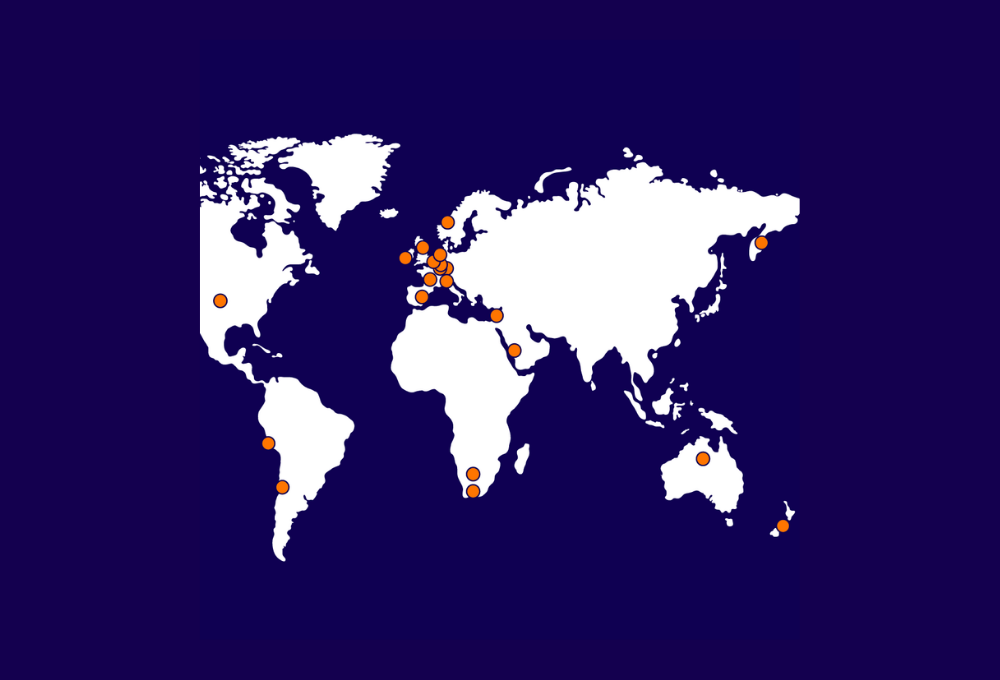
AIPP announced AIP Fusion, developed with libraries and consortia to provide unlimited reading and unlimited open access publishing across the full AIPP and partner portfolio under a single agreement, without individual APCs or article caps. By 2026, AIPP’s wider network of open access agreements—including AIP Fusion—covered 505 institutions and consortia around the world.

2026 — Streamlining Reporting Through OA Switchboard
AIPP joined OA Switchboard, enabling standardized exchange of publication, affiliation, funding, and licensing metadata with institutions and funders. The integration supports more reliable OA reporting and reduces the administrative work associated with agreements such as AIP Fusion.
More to Explore
These milestones offer a snapshot of how AIP Publishing’s approach to open science has developed over time—through new ideas, partnerships, experiments, and lessons from the communities we serve.
- Explore your open access options
- Read our Research Data Policy
- Learn about AIP Fusion
- Find out how to share your work
This timeline draws on AIP Publishing’s archives, journal records, policy documents, and partner announcements.
Last updated: October 2026