

An optical imaging system makes long-term skin hydration monitoring easier.
From the Journal: APL Photonics
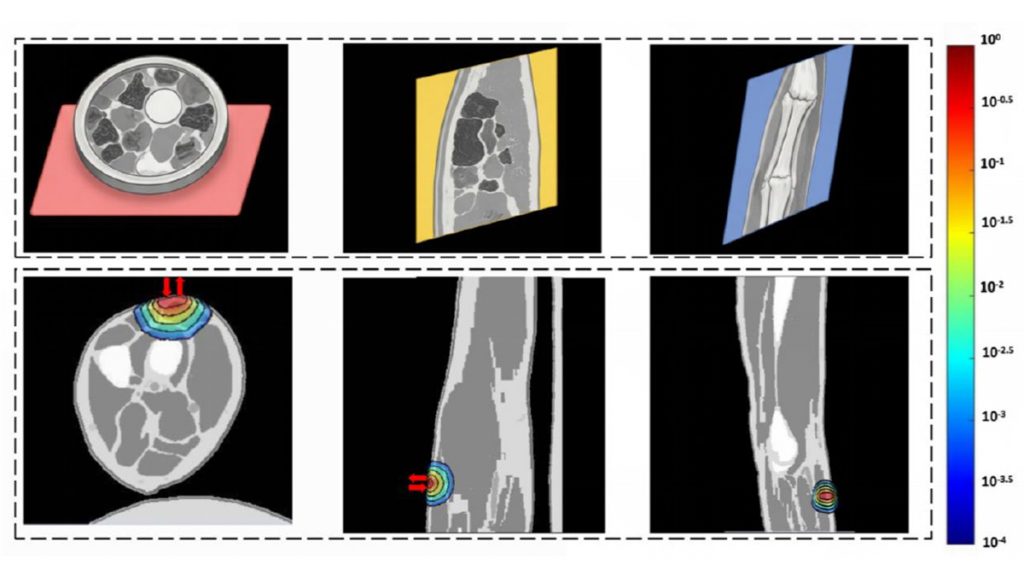
WASHINGTON, July 7, 2026 — Diagnosis and management of atopic dermatitis, a type of eczema, are complicated by skin temperature fluctuations, unclear responses to at-home moisturizers, and measurement systems that don’t penetrate into the deep layers of skin affected by disease.
“Skin hydration matters a great deal in atopic dermatitis, but the tools used to assess it are still not ideal,” said Ting Li, a researcher at the Chinese Academy of Medical Sciences & Peking Union Medical College. “For a person with chronic dry or inflamed skin, the ideal outcome is simpler and more objective monitoring: Instead of relying only on how the skin feels that day, or waiting for clinic visits, they could have access to a fast, noninvasive way to track whether their skin hydration state is getting worse or better.”
In APL Photonics, by AIP Publishing, Li and other researchers from the Chinese Academy of Medical Sciences & Peking Union Medical College, the Characteristic Medical Center of Chinese People’s Armed Police Force, and Cardiff University redefined the state of the art in skin hydration monitoring and diagnosis using infrared imaging.
“The most interesting part was that the information returned by the optical system became much more useful once we stopped thinking only in terms of water content and instead treated it as a hydration-related optical index,” Li said. “Skin is not a pure water slab. Once we embraced that complexity and designed the algorithm around it, the system became much more robust.”
The researchers created an optical hydration index that serves as a digital biomarker, combining multiple inputs and measurements to gain a more comprehensive picture of the state of the skin. They built, optimized, and tested a near-infrared optical system that, when combined with a temperature-aware algorithm, allows more robust at-home skin monitoring.
“With temperature changes, water absorption behavior can shift, tissue optical properties can vary, blood flow can change, and tissue microstructure can subtly alter light scattering,” Li said. “That is why temperature was a key part of our design — we measured skin-surface temperature and included it in the regression model, which improved stability and reduced one of the important sources of real-world measurement variability.”
They had to overcome the challenges inherent in measuring light reflectance beyond the surface of the skin, a complex and layered medium.
Their optical hydration index combines a variety of factors into a single measurement score that has practical implications for skin management.
“The main goal was to create a compact, noninvasive hydration-sensing system that would be more robust than conventional superficial methods and still practical enough for repeated use,” Li said. “Real skin is biologically complex, and a useful clinical signal often comes not from pretending the tissue is simple, but from designing a system that remains stable despite that complexity.”
###
Article Title
Authors
Yisong Xue, Xiang Yao, Zhaodong Chen, Haihuan Xu, Chenxi Yang, Songqi Yang, Chris Yang, and Ting Li
Author Affiliations
Chinese Academy of Medical Sciences & Peking Union Medical College Characteristic Medical Center of Chinese People’s Armed Police Force, Cardiff University